
Finding the best air purifiers shouldn’t feel like a chore when you just want to breathe easily. Are you tired of constant sneezing or stale odors ruining your home? Imagine waking up in a house filled with crisp, life-changing fresh air every single morning. By focusing on HEPA filters and indoor air quality, we’ve found the perfect solutions for your family. Here is our expert guide to help you choose the right model today.
Contents
- Top 7 Air Purifiers:
- 7: GermGuardian AC4825E HEPA Air Purifier
- 6: MOOKA KJ190H HEPA Air Purifier (2200 Ft²)
- 5: LEVOIT Vital 100S-P Smart Air Purifier
- 4: WINIX 5520 True HEPA Air Purifier
- 3: LEVOIT Vital 200S-P Air Purifier
- 2: Shark NeverChange HP152 Air Purifier
- 1: AIRDOCTOR AD2000 UltraHEPA Air Purifier
- Things to Consider Before Buying a Air Purifier:
- HEPA and Activated Carbon Filtration
- UV-C Light and Ionic Systems
- CADR Ratings and Room Size Capacity
- Noise Levels and Energy Efficiency
- Improved Respiratory Health and Odor Removal
- Recurring Maintenance and Filter Replacement Costs
- Identifying Your Specific Indoor Pollutants
- Comparing Manufacturer Warranties and Smart Features
- Strategic Placement for Maximum Air Circulation
- Best Practices for Sensor Calibration and Cleaning
- Final Words
Top 7 Air Purifiers:
7: GermGuardian AC4825E HEPA Air Purifier

If you’re looking for an affordable allergy remedy, go no further than the GermGuardian AC4825E.Your need for quick, easy access to clean air increases the instant you step foot in your own home.To start, allergens like pollen, dust, and dander are no more thanks to a True HEPA filter’s 99.97% particle capture rate down to 0.3 microns.The next step is to add an activated carbon layer, which neutralizes odors caused by cooking and pets.
At long last, a compact 22-inch tower that doesn’t take up much room can clean 743 square feet every hour.Downside: you have to manually adjust the speed; there is no auto mode or air-quality sensor. In terms of allergies, the UV-C light is ineffective.Who it’s best for: thrifty first-time purchasers. Not for: those who require automatic sensing or a mobile app.
6: MOOKA KJ190H HEPA Air Purifier (2200 Ft²)

The MOOKA KJ190H is the most cost-effective option that provides visible air purification results.You can’t be sure that cheap purifiers actually work. The uncertainty is eliminated by the KJ190H.To start, as allergen levels rise, a real-time PM2.5 air-quality indicator with an auto mode accelerates its response.A three-stage system, including a washable pre-filter, and an H13 HEPA filter capture 99.97% of tiny particles.
Last but not least: it has a 2200 square foot coverage area and, when set to sleep mode, reduces the noise to a peaceful 20 decibels.Drawbacks: There is a smaller support base for the lesser-known brand. There is no voice control or app. Proprietary filters are used.Who it’s ideal for: frugal consumers seeking extensive coverage with real-time data display. Do not use if you require an app or a well-known brand.
5: LEVOIT Vital 100S-P Smart Air Purifier

When it comes to advanced, hands-free allergy control, nothing beats the LEVOIT Vital 100S-P.As soon as your symptoms alter, you’ll get tired of adjusting your purifier. The 100S-P takes care of it.To start, get complete smart Wi-Fi control—manage it with your voice or phone, set up automatic modes and schedules, and more.The next one is AHAM Verifide, which has a Pet Mode for fur and dander and can capture 99.97% of particles down to 0.3 microns.
Lastly, the fan may be turned off while using the HEPA sleep mode, and the air intake is wide and U-shaped, so more air can be drawn in per pass.Downside: initializing the app requires some time. A single room, not an entire level, can be covered. Dependable Wi-Fi is required for certain functions.The ideal fit for those who are tech-savvy but still have allergies, as well as their pets. Not for: those seeking complete house coverage or zero apps.
4: WINIX 5520 True HEPA Air Purifier
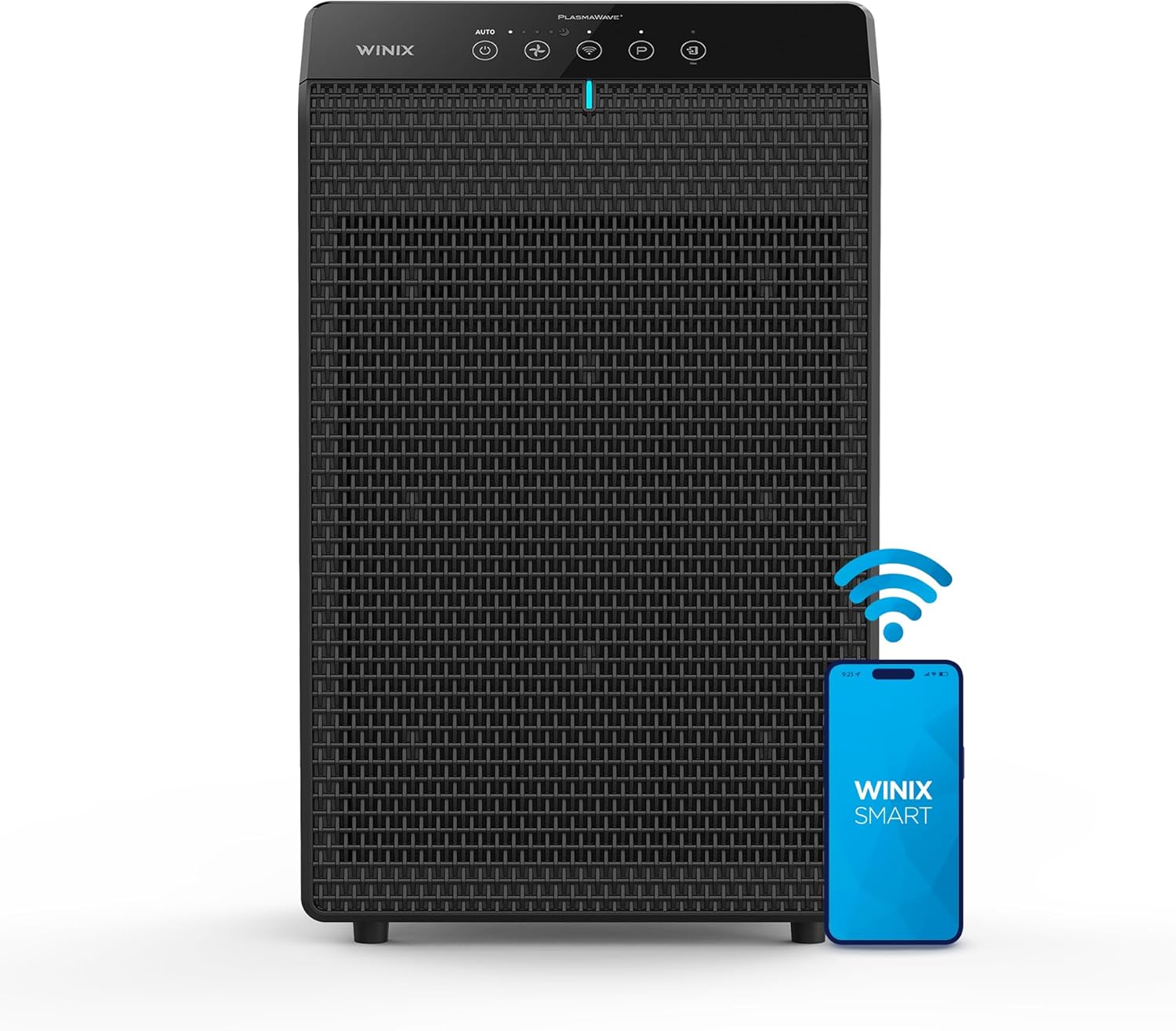
For simultaneous action against allergies and foul odors, go no further than the WINIX 5520.Even though it removes particles, HEPA alone leaves odors. Both are attacked by the 5520.To start, allergens as tiny as 0.3 microns can be captured by True HEPA, meaning dust, dander, and pollen are all gone.After that, a thick carbon deodorization filter takes in odors and volatile organic compounds that regular HEPA filters just recirculate.
Lastly, an indicator reveals the air quality, and smart sensors with an auto mode read the environment and regulate the fan.Cons: To maintain odor reduction, the carbon filter must be replaced frequently. We do not have a mobile app. The style is unadorned.Good for: houses where there are odors of cooking, smoking, or pets. Those seeking merely particles or an app should not use this.
3: LEVOIT Vital 200S-P Air Purifier

If you have allergies, you need the LEVOIT Vital 200S-P, the greatest room air purifier on the market.A large living room quickly reduces the size of most purifiers. The 200S-P is designed for use in space.To begin, it is AHAM Verifide, designed with allergy groups in mind, and can effectively clear spaces up to an impressive 1875 square feet.Afterwards, a dual plus U-shaped air intake increases the airflow per cycle, leading to more efficient and uniform filtering.
At last, there is an air-quality monitor featuring a silent HEPA sleep mode, a washable pre-filter, and 99.97% filtering down to 0.3 microns.Drawbacks: Expensive compared to mid-range options. Roomier than a typical bedroom apartment. Compared to inexpensive models, replacement filters are more expensive.Open floor plans and people with severe allergies will benefit the most from this. Not recommended for: narrow bedrooms or limited budgets.
2: Shark NeverChange HP152 Air Purifier

If you’re sick of constantly having to buy new filters, the Shark NeverChange HP152 is a great option.Filters are an ongoing expense with every other purifier on the market. This is terminated by the HP152.To start, you won’t have to buy replacement filters for a long time because NeverChange long-life filtration lasts for years, not months.Next, an Anti-Allergen NanoSeal filter can capture 99.98% of dust, dander, and fine allergens, surpassing HEPA standards.At last, an odor neutralizer keeps the air fresh and CleanSense IQ automatically changes the air quality based on your measurements.
Downside: It only covers up to about 650 square feet, so it’s more suited for bedrooms than living areas. Not everyone like the fragrance release, and the filter still requires washing every so often.Those who despise regular maintenance and spending on filters will love this. Rooms with a lot of space or people who dislike strong scents might not be good candidates.You can get rid of those pesky filter nickels and dimes with the HP152 air purifier. Are you through with filter purchases? This concludes it.
1: AIRDOCTOR AD2000 UltraHEPA Air Purifier

In 2026, the AIRDOCTOR AD2000—home air cleansing at a hospital level—was voted best air purifier for asthma and allergy sufferers.At 0.3 microns, standard HEPA filters are considered clean. Slightest particles of smoke and allergens pass through unnoticed. The AD2000 bridges that chasm.To begin, compared to standard HEPA filters, UltraHEPA filters are one hundred times more effective in capturing 99.99% of particles at a size of just 0.003 microns. Compared to everything else, this is it.
Second, unlike standard filters, premium carbon and VOC filters remove harmful gasses, smoke, and odors.Lastly, the AirDoctor Halo’s Auto Mode can automatically read your air quality and make adjustments.As for the fourth point, it will prevent triggers from piling up as it can clear 305 square feet in just fifteen minutes.Cons: this is, without a doubt, the priciest option available. Filters are more expensive to replace. Coverage is excellent for a bedroom but not a living room.Who it’s best for: People with severe allergies or asthma who want the best filtration. Ideal for: small apartments or those on a tight budget.
Things to Consider Before Buying a Air Purifier:
You need to evaluate several factors when choosing an air purifier. Consider room size, filter type, maintenance costs, and specific air quality needs. Understanding these elements will help you select a device that effectively improves your indoor air quality and meets your lifestyle requirements.
HEPA and Activated Carbon Filtration
HEPA filters capture small particles, while activated carbon excels at eliminating odors and gases. Combining these technologies provides comprehensive air purification, effectively filtering allergens and unpleasant smells.
UV-C Light and Ionic Systems
UV-C light systems use ultraviolet rays to neutralize pathogens, making your air cleaner. Ionic systems release ions that attach to airborne particles, causing them to clump together for easier filtering.
While UV-C light is effective against microbes, its efficacy depends on exposure time and lamp intensity. Ionic systems can produce ozone, which may pose respiratory issues if levels exceed safety limits. Thus, always choose models that balance these features for optimal health benefits.
CADR Ratings and Room Size Capacity
Choosing a unit with appropriate Clean Air Delivery Rate (CADR) ratings ensures effective air purification for your space. Select a purifier matching or exceeding the CADR recommendations for your room size to maintain optimal air quality.
Noise Levels and Energy Efficiency
Evaluating noise levels can impact your comfort, especially in bedrooms or quiet spaces. Look for models with noise ratings below 50 decibels for a peaceful environment while ensuring energy efficiency to keep operating costs manageable. Operating an air purifier should not disrupt your daily routine. Units with energy-saving features often use less electricity, reducing your carbon footprint. Energy Star-rated models balance performance with low operational costs, making them environmentally friendly and wallet-conscious choices.
Improved Respiratory Health and Odor Removal
Investing in an air purifier can lead to clearer air, significantly enhancing your respiratory health and eliminating unpleasant odors. By filtering out allergens, dust, and smoke, these devices help create a fresher indoor environment, promoting overall well-being.
Recurring Maintenance and Filter Replacement Costs
Regular maintenance and filter replacements can add to the overall expense of owning an air purifier. Filters generally need to be changed every few months, depending on usage. This cost can accumulate over time, making it crucial to factor these ongoing expenses into your budget.
Costs associated with maintenance can vary significantly based on the type and model of the air purifier. Some high-efficiency models may have pricier filters, while others might be less costly but require more frequent replacements. Understanding these expenses beforehand will help you plan effectively for the long term, ensuring you remain committed to maintaining indoor air quality.
Identifying Your Specific Indoor Pollutants
Determine the types of pollutants in your space, such as dust, pet dander, smoke, or allergens. This knowledge helps you select an air purifier equipped with the right filtration technology to target those contaminants effectively.
Comparing Manufacturer Warranties and Smart Features
Examine the warranties offered by manufacturers as they indicate the product’s longevity and reliability. Evaluate smart features like air quality monitoring and app control, as these can enhance user experience and provide real-time information on your indoor air quality.
Strategic Placement for Maximum Air Circulation
Position your air purifier centrally within a room for optimal air circulation. Avoid corners and enclosed spaces, as these limit airflow. Ensuring at least a few feet of clearance around the device allows for efficient pollutant capture.
Best Practices for Sensor Calibration and Cleaning
Schedule regular checks to keep sensors calibrated and effective. Dust and debris can affect sensor accuracy, so routine cleaning ensures reliable air quality readings.
Cleaning sensors typically involves wiping them gently with a microfiber cloth to eliminate dust buildup. Calibration adjustments should be made according to the manufacturer’s guidelines to ensure they reflect true air quality levels. Developing a maintenance schedule for these tasks contributes to long-lasting performance and trust in air quality readings.
Final Words
Following this guide ensures you assess your air quality needs, budget, and the specific features that fit your environment. Consider factors like filter types, noise levels, and CADR ratings to make an informed purchase. Investing in the right air purifier can significantly enhance your indoor air quality and overall well-being.
Leave a Reply