
Hunting for the best bass headphones can often feel like a battle between raw power and clear sound. You crave that chest-thumping impact, but you also want crisp details, not just muddy noise. We tested top models to find gear that delivers deep lows and incredible audio quality. Get ready to experience your favorite playlists with electrifying intensity. Let’s turn up the volume on our top winners.
Contents
- Top 5 Bass Headphones:
- 1. Skullcandy Crusher ANC 2 – Best Bass Headphone Overall
- 2. Bose QuietComfort – Best Bass Headphone for Comfort
- 3. Soundcore Anker Space Q45 – Best Noise Cancelling Bass Headphone
- 4. JBL Tune 770NC – Best Battery Life Bass Headphone
- 5. JBL Tune 720BT – Best Budget Bass Headphone
- Things to Consider Before Buying a Bass Headphone:
- Over-Ear Bass Headphones
- On-Ear Bass Headphones
- In-Ear Bass Headphones
- Sound Quality
- Comfort and Fit
- Checking Frequency Response
- Advantages
- Disadvantages
- Conclusion
Top 5 Bass Headphones:
1. Skullcandy Crusher ANC 2 – Best Bass Headphone Overall
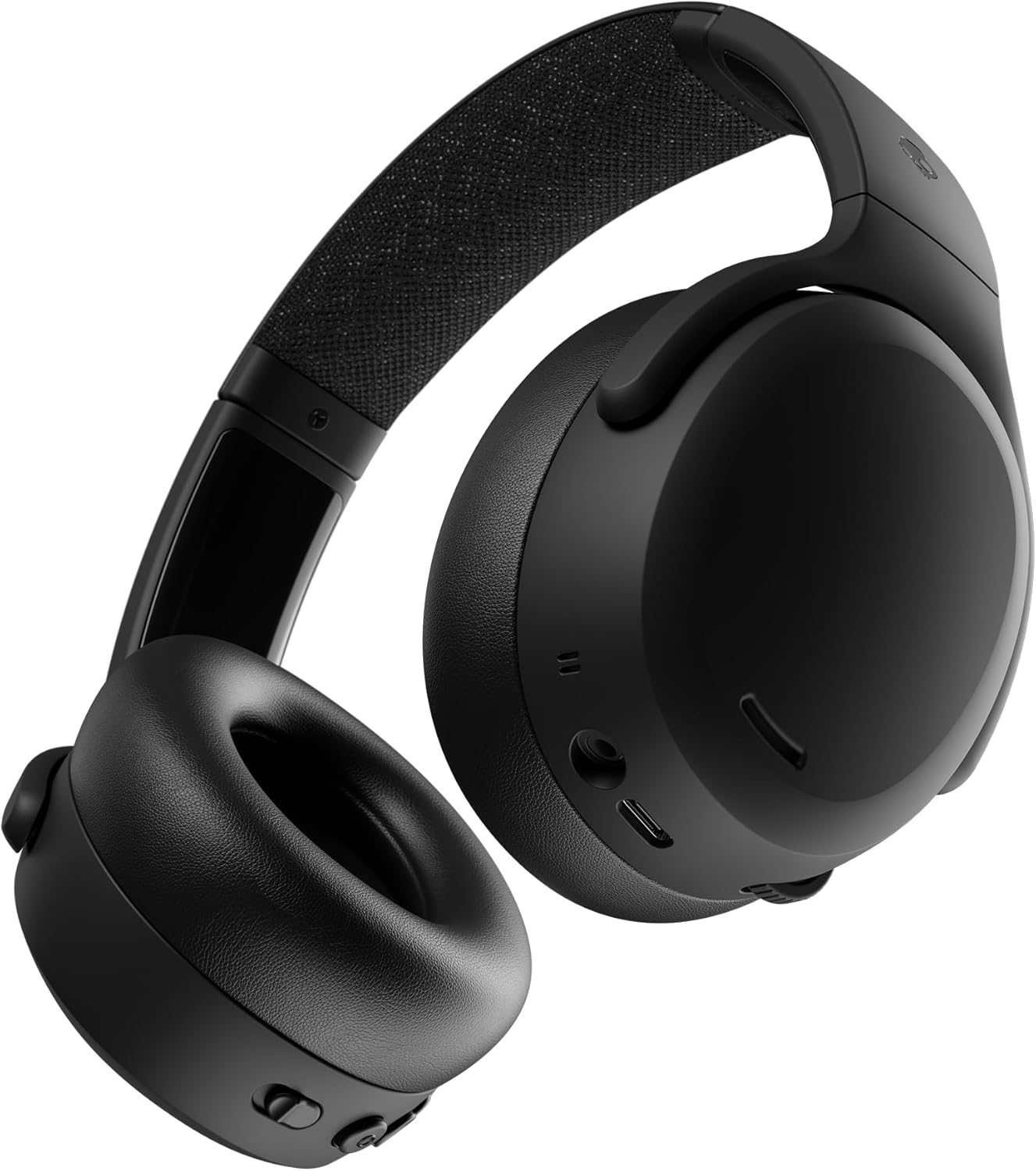
Get the Skullcandy Crusher ANC 2 if you’re after bass that packs a punch. With two full-range 40mm drivers and dual bass drivers, this headphone uses Skullcandy’s exclusive multi-sensory Crusher Bass technology to give you an immersive low-end thud that other headphones just can’t replicate. Because of this, it is an excellent pick for those who like dynamism, rumble, and that “front-row” feeling.
With the four-mic active noise cancellation that you can regulate, you can drown out the world around you when it becomes too noisy. Particularly helpful on commutes, in the office, or in hectic homes, you may adjust the volume to suit your surroundings rather than settling for a single fixed level. To maintain some ambient sound in the mix, you can switch to Stay-Aware mode if you still need awareness.
Another notable aspect is the battery life. You can avoid repeatedly charging your device by turning off active noise cancellation, which extends the listening time to up to 60 hours. In addition, Rapid Charge allows you to quickly refuel when you’re running low on juice; only 10 minutes of charging time can provide around 4 hours of playback.
The Skull-iQ app also provides individual adjustment. The EQ settings and Personal Sound by Mimi allow you to customize the sound to fit your personal style and hearing needs. You can stay connected to two devices and seamlessly switch between them with multipoint pairing, which adds even more ease.
2. Bose QuietComfort – Best Bass Headphone for Comfort

The Bose QuietComfort is designed for lengthy, easy listening if comfort is your main concern while yet requiring great bass and powerful noise control. Whether you’re making calls, listening to music, or working on a podcast while commuting or trying to unwind, this hybrid of active noise cancellation and passive isolation can let you tune out the world around you.
The true measure of these headphones’ quality is in the fit. A padded headband keeps everything in place without putting any strain on your head or ears, while plush over-ear cushions provide a gentle fit. That means you won’t experience the “take them off” tiredness that many headphones do after a while of use.
You also receive basic, useful command over your environment. When you want to completely block out ambient noise, choose Quiet Mode. On the other hand, if you need to have your wits about you, activate Aware Mode and let the world around you ring again. You won’t need to take your headphones out of your ears all the time to switch between the two because they’re so fast.
With a full charge lasting up to 24 hours, the battery life is more than enough for daily use. A fast 15-minute charge over USB-C can provide an additional 2.5 hours of listening time, allowing you to power through the remainder of your day, even when time is of the essence.
3. Soundcore Anker Space Q45 – Best Noise Cancelling Bass Headphone

With its bass-forward sound and impressive ability to block out ambient noise, the Soundcore Anker Space Q45 is an excellent choice for those who value a peaceful environment. To help you concentrate on your music, podcast, or work without being distracted by outside noises, it has an improved noise cancellation system that can filter out a broad variety of sounds, including airline engine hum, conversation, and unexpected background noise.
This headphone’s adaptive noise cancellation is where it shines in your daily life. Instead of having to fiddle with the settings all the time, it can detect your environment and modify the ANC level accordingly, whether you’re inside, outside, commuting, or in the air. Plus, there are five different noise-cancelling levels to pick from on the app, so you can find the perfect one for your needs and surroundings.
Long periods of use or travel necessitate a battery that can keep going. In noise-cancelling mode, you get 50 hours, and in regular mode, you get 65. For those times when you’re in a need, a rapid 5-minute charge will provide you with around 4 hours of listening time—ideal for those times when you’re on the go.
Exciting without sacrificing detail, the sound quality is fine-tuned. Full, precise sound is reproduced by the 40 mm speakers’ double-layer diaphragm constructed of silk and ceramic materials, which allows for powerful bass and clear treble. Because you’ll be wearing them for hours on end, the Q45 prioritizes comfort with an ergonomic design that will keep them pleasurable even as you listen for longer periods of time.
4. JBL Tune 770NC – Best Battery Life Bass Headphone

The JBL Tune 770NC are bass-forward headphones that won’t die on you in the middle of the day. They let you listen for longer without sacrificing environmental control. Beats hit more forcefully and movies seem more lively without cranking up the volume thanks to JBL Pure Bass Sound.
If you’re having trouble focusing on your work, studying, or commuting, Adaptive Noise Cancelling can assist. However, you are not confined to complete solitude. If you want to be aware of your surroundings, turn on Ambient Aware on the JBL Headphones app. If you want to have a fast conversation without taking the headphones off, utilize TalkThru.
With wireless headphones from JBL, you can listen without interruption and customize the sound to your activity with the accompanying app. When you want your music to sound its finest, choose Audio Mode. When you’re watching a movie or playing a game, choose Video Mode to make sure the sound and graphics stay in sync. So that the headphones don’t force you into one tune but rather suit your taste, you can customize your sound using EQ presets or manual EQ tweaks.
You can easily answer calls, change songs, and adjust the volume with the buttons on the ear-cup, which are also used for everyday controls. With VoiceAware, you can hear your own voice while on the phone, making calls more relaxed and natural.
5. JBL Tune 720BT – Best Budget Bass Headphone

A great option for everyday listening if you’re looking for powerful bass without breaking the bank is the JBL Tune 720BT. With JBL’s Pure Bass Sound, your music (whether it’s hip-hop, EDM, pop, or even movie soundtracks) will sound deeper and more powerful than ever before, with vocals and details still audible and usable in everyday situations.
With Bluetooth 5.3, you can enjoy uninterrupted wireless streaming from your laptop or phone without the hassle of cables. Not only that, but the free JBL Headphones App gives you the power to tweak the EQ to your liking, because everyone has their own unique taste in music. Do what sounds best to you when listening to your playlists—boost the lows, equalize the mids, or muffle the highs. In addition to being able to select your preferred language, voice prompts make it easy to navigate the functions.
The battery life is also really impressive. With a maximum playback time of 76 hours, you won’t need to worry about finding a charger for days. When electricity is required, USB-C speed charging makes things easy—a complete recharge takes about 2 hours, or you can get about 3 more hours of listening with just 5 minutes.
The buttons on the ear cups allow you to quickly answer calls, change the volume, and change tunes. You may hear your own voice while using Voice Aware, making calls seem more organic.
Things to Consider Before Buying a Bass Headphone:
Buying a bass headphone means weighing sound signature, bass type and control, and how the low end balances with mids and highs so your mixes or music retain clarity; you should also assess fit and comfort, impedance and portability, isolation and leakage, build quality, and whether your source can drive the headphones within your budget.
Over-Ear Bass Headphones
You’ll find over-ear models typically use 40-50mm drivers that deliver controlled sub-bass down to ~20 Hz; closed-back designs often reduce ambient noise by ~6-12 dB and suit mixing or immersive listening, and examples like the Beyerdynamic DT 770 Pro or Sony WH-1000XM4 show how tuning and isolation affect perceived bass weight.
On-Ear Bass Headphones
You get a compact profile with 30-40mm drivers that produce punchy low end but often less isolation and more bass leakage than over-ear models, making them a good compromise for short commutes and portable use; typical impedance sits around 16-32 Ω.
You should watch for clamp force and pad design since extended wear can change bass perception and comfort; technically, on-ear models usually show sensitivity in the 98-105 dB range and a narrower soundstage, so if you want impactful bass without heavy bulk, prioritize models with well-tuned mid-bass (e.g., boosted 100-250 Hz) rather than excessive sub-bass that causes muddiness.
In-Ear Bass Headphones
You’ll notice in-ears rely on sealed coupling and driver type-dynamic (6-12mm), balanced-armature, or hybrid-to produce punchy bass with good isolation (up to 25-30 dB with foam tips), and many achieve extension down to ~10-20 Hz when properly fitted; popular choices include the Shure SE215 and similar tuned IEMs.
You must focus on fit, nozzle shape, and tip material because a proper seal can change bass response dramatically; additionally, driver configuration matters-single dynamic drivers emphasize warmth, balanced-armatures can tighten mids, and hybrids aim to combine low-end impact with midrange clarity-so match the IEM’s tuning and impedance (often 16-150 Ω) to your source or portable DAC/amp for best results.
Sound Quality
Focus on sub-bass extension below ~60Hz, mid-bass punch around 60-250Hz, and total harmonic distortion-aim for models that keep THD under 1% at typical listening levels; you want tight, fast bass that doesn’t mask vocals. Use test tracks like low-frequency synths and check trusted reviews (e.g., Rtings, InnerFidelity) to match measured curves with what you hear, and consider using a DAC/amp for high-impedance cans.
Comfort and Fit
Pick headphones with a weight in the 200-350 g range, earcup internal diameters ≥45 mm for full-ear coverage, and pads made from memory foam with breathable velour to reduce heat; you should test for clamping force around 200-350 grams to balance seal with pressure and confirm the headband offers ~10 mm adjustment range for your head shape.
Also inspect swivel and hinge design-single-axis rotation helps desk use while multi-axis aids pocketability-and choose replaceable pads and modular cables so you can swap worn parts instead of replacing the whole unit, improving long-term comfort and value.
Checking Frequency Response
Consult measured frequency-response graphs: flat studio-style cans sit within ±3 dB across 60-8,000 Hz, while consumer bass phones show a 6-12 dB hump near 50-100 Hz; extension down to 20-40 Hz signals true sub-bass. Cross-check sources like RTINGS or Harman target measurements so you know whether a boost is musical or masking mids.
Interpret graphs alongside real listening: look for a steep rise below ~100 Hz (indicates colored bass), dips around 200-400 Hz (lack of warmth), and peaks in 2-5 kHz that affect presence. Account for impedance and your amp-frequency response can shift with load, and coupler measurements differ from on-ear results. Thou should combine measured data with focused listening using tracks you trust so you get the tonal balance you need.
Advantages
You’ll get pronounced low-end that reproduces sub-bass (20-60 Hz) and low-bass (60-100 Hz) with authority, which makes EDM, hip‑hop and cinematic tracks feel physical; many models intentionally add ~3-6 dB around 40-80 Hz to enhance punch, and that boost improves perceived impact at moderate volumes without needing to raise overall SPL.
Disadvantages
You may find mids and vocal detail obscured because boosted lows can mask frequencies in the 200-2,000 Hz range; engineers often avoid bass-heavy cans when mixing for this reason, and casual listeners can end up with mixes that translate poorly to neutral systems.
Often the practical downside is that you’ll misjudge balance: if you use bass headphones for production or testing, you might EQ down 60-120 Hz too much, producing weak bass on flat speakers. For portable use, note that wireless bass models can drop 10-30% of advertised battery life when driving sub-bass, and some budget drivers introduce distortion above 90 dB SPL which becomes audible at louder listening levels.
Conclusion
With these considerations, you can confidently choose bass headphones that match your listening style, budget, and comfort needs; evaluate sound signature, driver type, impedance, noise isolation, build quality, and portability, and test for balance between deep low end and clarity so your purchase delivers satisfying, controlled bass without sacrificing mids and highs.
Leave a Reply