
Best Bike Trainers make indoor cycling easy and effective when bad weather or busy schedules block your rides. We tested smart trainers and turbo trainer models to find reliable, high-value options. You’ll save time, ride harder, and build real fitness with clear picks and honest advice. This game-changing gear will transform workouts and ignite fierce motivation. Read on to discover the top choices and how to pick the right one for you.
Contents
- Top 7 Bike Trainers:
- 7: Saris M2 Smart Indoor Bike Trainer
- 6: ThinkRider X2Max Smart Bike Trainer
- 5: ThinkRider XXPRO Smart Bike Trainer
- 4: Wahoo KICKR CORE 2 Smart Trainer
- 3: Elite Direto XR Interactive Smart Trainer
- 2: Wahoo KICKR V6 Smart Indoor Trainer
- 1: Garmin Tacx Neo 2T Smart Trainer
- Things to Consider Before Buying a Bike Trainer:
- Fluid and Magnetic Resistance Units
- Direct-Drive and Interactive Smart Trainers
- Resistance Mechanisms and Realistic Ride Feel
- Noise Output and Living Space Constraints
- Data Accuracy and Connectivity Requirements
- Benefits of Year-Round Consistency and Safety
- Understanding Equipment Wear and Static Limitations
- Matching Trainer Features to Specific Fitness Goals
- Essential Accessories for Cooling and Comfort
- Maintenance Routines for Equipment Longevity
- Summing up
Top 7 Bike Trainers:
7: Saris M2 Smart Indoor Bike Trainer

Indoors, the Saris M2 is the most cost-effective option that keeps your back wheel in place.A cassette and bike disassembly are necessities for most trainers. Just clamp, set the wheel on the drum, and ride; the M2 doesn’t bother with that.First, the electromagnetic resistance changes in sync with the app, so you may experience actual climbs without having to fiddle with any dials.You can pair it with any app thanks to its built-in ANT+ FE-C and Bluetooth capabilities, and it is Zwift certified.
Lastly, regular road and mountain bike frames are compatible with the integrated steel quick-release skewer.The precision is only within ±5%, which is sufficient for fitness purposes but insufficient for racing. It is the loudest here at 69 dB. Tires degrade with time.This indoor riding facility is ideal for novices who want to see if their winter training is effective. Weak walls and watt-chasers are not compatible.
6: ThinkRider X2Max Smart Bike Trainer

If you ride with a group and want a low-priced direct-drive trainer, go no further than the ThinkRider X2Max.The noise and wear and tear on your tire can be overwhelming when you use wheel-on trainers. For a little bit more, the X2Max gets rid of both.The back wheel is removed and the chain is run onto the trainer as the first step. Tires never get worn.Next up: a speed of about 58 dB, which is barely audible in the house in the wee hours of the morning.
Lastly: a 2000 watt resistance and an 18 percent simulated slope, with measurements accurate to within two percent. True height for pauses.Cons: You will need to purchase an additional cassette since it is not included in the package. The premium trainers lag behind in accuracy. Minimal exposure for the brand beyond internet directories.Apartment riders, tyre savers, and first-time direct-drive purchasers are the ideal target audience. Not recommended for racers who require certified power.
5: ThinkRider XXPRO Smart Bike Trainer

Among these trainers, the ThinkRider XXPRO offers the most bang for the buck.Paying for a flagship number is typically expensive. They end up in the budget bracket instead, thanks to the XXPRO.The first is the quotation from equipment costing a thousand dollars: ±1 percent power accuracy without the need for calibration.After that, it can power itself. It makes the journey to race day for warm-ups even when unplugged entirely; it continues to run.
At long last, there’s 2500 watts of power, a 25% gradient ceiling, and downhill simulation that makes the road less steep as it dips away.The disadvantage of virtual shifting is how limited it is compared to Zwift’s own technology. *Sold separately* is the cassette. If an issue arises, support can only be accessed online.Those looking to save money or riders who want the latest and greatest specs first should consider this option. Customers wishing to have a local store contact them are not eligible.
4: Wahoo KICKR CORE 2 Smart Trainer
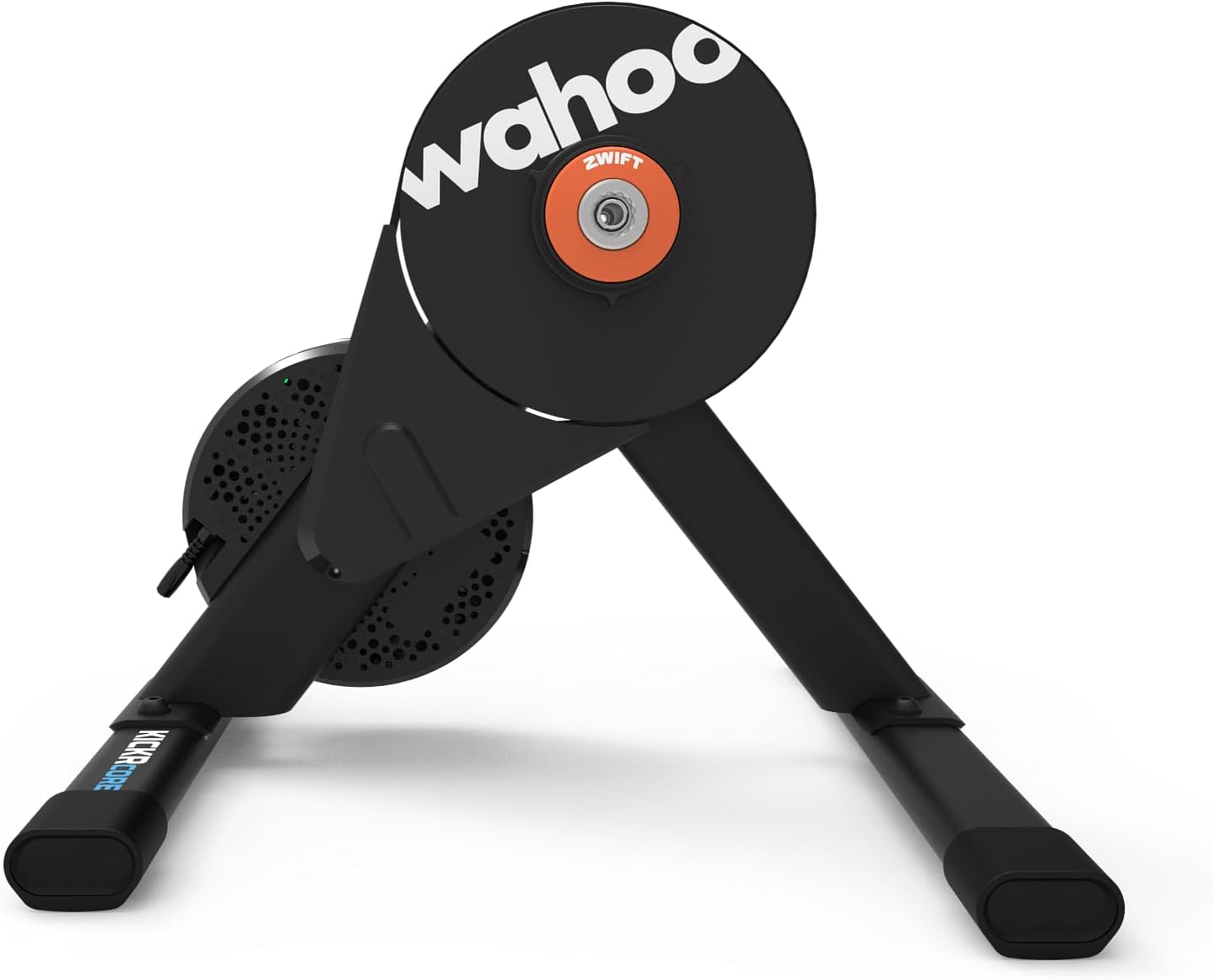
Most riders will find the Wahoo KICKR CORE 2 to be the greatest all-around trainer.When anything refuses to pair with your inexpensive trainers, the ride will stop before it even starts. You won’t find that in CORE 2.First, built-in WiFi. Quicker pairing, a more stable connection, and automatically updated firmware.The next step is to switch out shifting with Zwift Cog and Click. This system has one sprocket, a button on the handlebars, and silent shifts.
At last, a 5.4-kilogram flywheel, a 16% gradient, and 1800 watts make each stroke count.Drawbacks: it doesn’t fold its legs or have a carry handle, so once it’s down, it stays. Within Zwift, the Cog only makes minor adjustments.Zuft riders and first-time serious upgraders will find this the best. Avoid on tight spaces or if you often switch bikes.
3: Elite Direto XR Interactive Smart Trainer
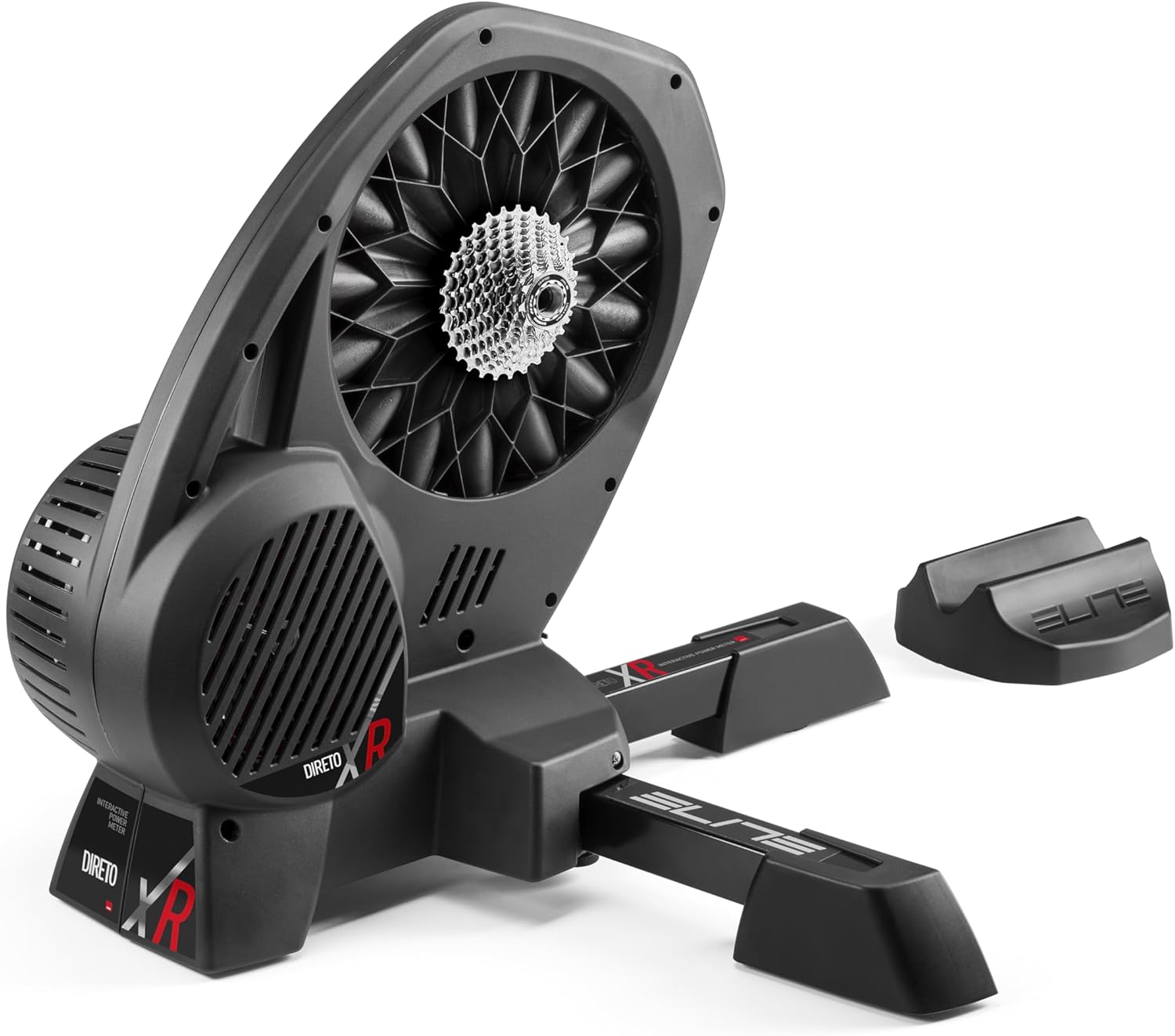
When it comes to climbing, the Elite Direto XR is the way to go.You won’t feel even the steepest inclines because most trainers level off before the virtual road does. Not the Direto XR.The first is a virtual gradient of 24%—this is steeper than trainers that cost twice as much.Climbs in the alps land safely.The following is real training-grade data: an optical torque sensor that can read power within ±1.5 percent.
Last but not least: a freehub compatible with nine to twelve speed Shimano and SRAM, quick-release and thru-axle adapters. Almost any bike can use it.Downside: you can’t get them out of the folded position quickly. Wahoo feels more real than Build. Flywheel weight is little.Ideal for: homes with a combination of drivetrains, hill-event cyclists, and climbers. Those who are finish-obsessed or who are just trying to keep moving forward will not like this.
2: Wahoo KICKR V6 Smart Indoor Trainer

If you race over the internet, you need the Wahoo KICKR V6.You lose control of the virtual race car if you lose even half a second. To prevent that, the V6 has every possible feature.To start, power data can be transferred eleven times quicker than usual in Race Mode over WiFi. An moment after your legs move, your avatar follows suit.The following are the available connections: WiFi, Ethernet, and three Bluetooth at once. All three devices (trainer, app, and head unit) may converse simultaneously.
Lastly, it has a self-calibrating ±1 percent accuracy, a 7.3-kilo flywheel, and AXIS feet that allow for five degrees of side-to-side lean.The lack of forward and backward mobility necessitates the use of a rocker plate. Less expensive footwear is now just as accurate. Bonus: twelve-speed cassettes aren’t cheap.Who it’s best for: riders who put in a lot of time on the bike, online racers, and regimented trainers. Apt for serious winter riders with a bit more disposable income.
1: Garmin Tacx Neo 2T Smart Trainer

The Garmin Tacx Neo 2T, the pinnacle of indoor cycling simulators in 2026, provides an experience almost identical to that of riding outside.Resistance is not a path, and every other trainer provides you that. Down below you, roads tremble, buzz, and eventually crumble. That is returned by the Neo 2T.First things first: getting a feel for the road. As the simulated surface changes, the trainer literally vibrates to replicate cobblestones, gravel, and wooden planks. Nobody else here even bothers to try.Secondly, we have descent modeling. On downhills, the flywheel is propelled forward by 32 neodymium magnets, allowing gravity to carry you rather than dead pedals.
Thirdly, machines with ±1% accuracy and a 25% gradient ceiling are significantly more expensive.Finally, the fact that it can function independently of any external power source is great. Never again will you have to look for an outlet, an extension cord, or a socket.Negative: You’ll need both hands to lift it because it’s 47 pounds. Not included: cassette. Unlike the most recent Tacx, this one doesn’t have moving plates.Optimal for: long-term installations and riders that value realism highly. Do not purchase if you are on a tight budget or plan to move every week.
Things to Consider Before Buying a Bike Trainer:
Many enthusiasts find that a bike trainer can greatly enhance indoor cycling experiences. Choosing the right model involves assessing your specific needs, budget, and space constraints. Understanding these factors will help you make an informed decision tailored for your fitness goals.
Fluid and Magnetic Resistance Units
Fluid and magnetic resistance trainers offer distinct advantages and disadvantages. Fluid units provide a smooth ride and simulate realistic road conditions but can be more expensive. Magnetic options tend to be budget-friendly, though they may lack the same fluidity in resistance changes. Both types cater to different training needs and experiences.
Direct-Drive and Interactive Smart Trainers
Direct-drive trainers enable better power tracking due to their connection to the bike’s drivetrain, providing an accurate workout measurement. Smart trainers enhance your training with virtual simulations, allowing you to ride with others online or follow structured workouts. The technology can adapt real-time resistance, making workouts more engaging.
Investing in direct-drive or interactive smart trainers can significantly enhance your riding experience. These trainers often feature compatibility with popular training platforms, allowing for immersive experiences during your indoor rides. This integration can attract motivation and even foster a sense of community through shared virtual rides. Brands like Wahoo and Tacx are leading in this innovative space, bringing high-tech options to cyclists of all levels.
Resistance Mechanisms and Realistic Ride Feel
Resistance mechanisms determine how closely the trainer simulates outdoor conditions. Magnetic and fluid resistance options provide varying levels of realism, engaging different muscle groups. Choosing the right mechanism will enhance your overall workout experience, making it feel more natural and effective.
Noise Output and Living Space Constraints
Noise levels are necessary when selecting a trainer, especially in shared living spaces. Trainers with fluid resistance are typically quieter than magnetic models, allowing for comfortable use without disturbing others.
In apartments or homes with thin walls, excessive noise can be a significant drawback. Many users find that noise output affects their ability to train at any hour; quiet trainers enable you to maximize workout times without worrying about displeasing neighbors or family members.
Data Accuracy and Connectivity Requirements
Data accuracy is key for tracking performance metrics, making it an necessary consideration. Trainers that offer Bluetooth or ANT+ connectivity will easily sync with apps and devices, providing you with real-time data to monitor progress.
High-quality trainers typically offer precise readings of speed, power, and cadence, allowing for detailed analysis of your workouts. Selecting a model compatible with preferred fitness apps enhances the overall training experience, ensuring you can set goals and monitor results effectively.
Benefits of Year-Round Consistency and Safety
Consistency is key for any cyclist looking to improve performance. Training indoors allows you to maintain a regular schedule regardless of weather conditions, enabling you to stay safe while meeting your fitness goals.
Understanding Equipment Wear and Static Limitations
Equipment wear is an inevitable aspect of indoor training. Over time, components like tires and resistance units may require replacement, affecting performance and safety.
Static limitations often arise during indoor cycling. Unlike outdoor riding, where engaging with various terrains can enhance handling skills, stationary training can lead to a lack of bike control practice. Additionally, wear on indoor equipment culled from consistent use mandates regular maintenance checks to ensure longevity and optimal functionality. For example, rollers or tires are particularly prone to degradation due to friction and consistent pressure, necessitating awareness of potential performance impacts. Regular inspections can mitigate unexpected breakdowns during critical training sessions.
Matching Trainer Features to Specific Fitness Goals
Select features aligned with your training objectives, whether it’s building endurance or replicating outdoor conditions. Options such as adjustable resistance and smart technology can significantly influence your training effectiveness.
Consider whether your goals are enhancing strength, improving speed, or increasing endurance. A trainer that offers progressive resistance or integration with fitness apps provides tailored workouts. For instance, a cyclist focused on sprint training may benefit from a direct-drive trainer with high wattage output, while someone looking for a casual ride might prefer a simpler model.
Essential Accessories for Cooling and Comfort
Investing in cooling accessories can greatly improve your indoor cycling experience. A high-capacity fan or an air conditioner will help regulate temperature, while moisture-wicking towels keep sweat at bay. These importants not only boost comfort but also encourage longer training sessions.
Maintenance Routines for Equipment Longevity
Regular maintenance is fundamental for ensuring your bike trainer endures over time. Cleaning the trainer, lubricating moving parts, and inspecting wear can prolong its lifespan dramatically.
Implementing a maintenance schedule can prevent minor issues from escalating. Wipe down surfaces after each use to remove sweat and grime. Ensure moving parts are properly lubricated, as this reduces wear and keeps everything functioning smoothly. Regularly checking for any signs of damage is also important to identify potential problems early.
Summing up
Choosing the right bike trainer requires careful consideration of your specific needs and goals. Analysis of features like resistance types, compatibility with your bike, and available space can significantly impact your indoor training experience. Selecting a trainer that aligns with your fitness objectives will enhance your overall performance and consistency.
Leave a Reply