
Finding the best bone conduction headphones shouldn’t be a struggle when you just want to stay safe outdoors. Standard earbuds often cause painful pressure or block out vital traffic noises. Our guide features top-rated open-ear design options that offer incredible situational awareness without sacrificing sound. Imagine the exhilarating joy of powering through your workout while staying perfectly connected to the world around you. We’ve tested the top picks to simplify your search. Here are the winners.
Contents
- Top 7 Bone Conduction Headphones:
- 7: PSIER Bone Conduction Headphones
- 6: SHOKZ OpenMove
- 5: Mojawa Purra Run
- 4: PSIER Dual Driver
- 3: H2O Audio TRI 2
- 2: SHOKZ OpenRun Pro 2
- 1: SHOKZ OpenSwim Pro
- Things to Consider Before Buying a Bone Conduction Headphone:
- The Mechanics of Sound Vibration via the Temporal Bone
- Distinguishing Open-Ear Design from Traditional Drivers
- Wireless Bluetooth Models for General Athletics
- Waterproof MP3 Integrated Units for Swimmers
- Transducer Quality and Sound Leakage Control
- Battery Longevity and Connectivity Standards
- Advantages in Situational Awareness and Ear Health
- Limitations Regarding Bass Response and Ambient Noise
- Measuring Head Size for Optimal Tension and Comfort
- Matching Technical Specifications to Your Primary Activity
- Optimizing Audio Settings for Vibration Clarity
- Proper Maintenance and Storage for Component Longevity
- Conclusion
Top 7 Bone Conduction Headphones:
7: PSIER Bone Conduction Headphones
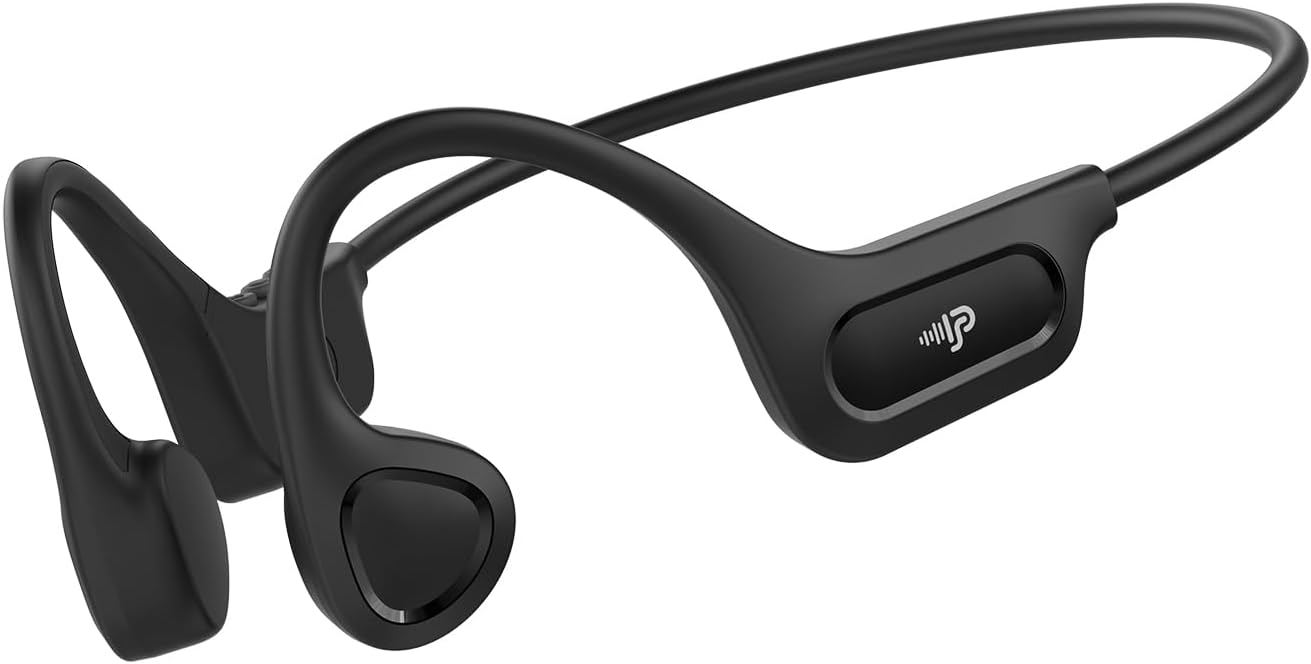
One of the greatest low-cost options for bone conduction is the PSIER.Poor fit causes them to fall off your face mid-run, and weak frames break in a bag, so most people start cheap and end up regretting it.All of them are fixed by PSIER.To start, when compared to previous bone conduction technologies, Bluetooth 6.0’s enclosed chamber design significantly decreases sound leakage—by a factor of 50%. Your ears will hear more, while those around you will hear less.
Following that, a memory-titanium frame weighing 23 grams—it molds to your head, remains securely in place during any exercise, and avoids pressure areas.Last but not least: a battery life of 10 hours, which is enough time for two complete training sessions before needing battery replacement.The catch is that it is only sweat and light rain resistant (IPX5). Do not submerge. No equalizer software and bass isn’t great.Ideal for: runners on a budget, frequent gym goers, and first-time customers. Not recommended for people who swim or require high-quality sound.
6: SHOKZ OpenMove

The SHOKZ OpenMove is the most effective and tried-and-true upgrade from ultra-budget.A no-name pick was your first attempt. Aside from the wind noise and framing issues, it sounds far away. Now is the moment for a reliable upgrade.The first is that the 8th generation of Shokz bone conduction technology allows for unobstructed sound to pass through your cheekbone rather than your eardrums.After that, a titanium frame that wraps around the rider keeps them in place during long commutes, sprints, and rides. It is so light that you won’t even notice you’re wearing it.
At last, a charging port that is both straightforward and frictionless, as well as universal compatibility with Windows, iOS, and Android.The drawback is that the shortest battery life here is six hours. There is no quick-charge option. Stereophiles will be underwhelmed.Ideal for: first-time Shokz purchasers, casual runners, and regular commuters. This is not the right shoe for swimmers or athletes competing over long distances.
5: Mojawa Purra Run

For runners seeking genuine bass and all-day battery life, the Mojawa Purra Run is the ideal bone conduction option.The sound of bone conduction is often faint and tremulous. Not a knockout. The song becomes inaudible to you.Mojawa took care of it.To begin, there is Maglev Bass Tech, which uses a magnetic levitation motor to project authentic low-end sound into your cheekbone. Deep bass, not merely vibrational bass.The next item on the list is the longest runtime for the price, at fifteen hours. An entire training week without having to find a charger.
At last, the Pro ENC AI noise cancellation mic with AI voice control—no more holding the phone or playing music—is here.Important note: this product is not suitable for swimming and is simply water-resistant to an IP67 standard. No rapid charging. Upstart company has less experience than the well-known brands here.Runners and cyclists seeking bass and endurance will find these the best. Warning: not suitable for those who swim.
4: PSIER Dual Driver

If you’re a swimmer who won’t settle for flat music in the pool, the PSIER Dual Driver is the best bone conduction selection.Underwater, every swimming headphone sounds thin. Loss of bass occurs with single-driver bone conduction. Your interest in the music wanes.PSIER included an additional driver.A 30% increase in bass compared to regular bone conduction is the first benefit of dual bone and air conduction. Both underwater and on land, you’ll hear lower end, clearer highs.On to the next one: the IPX8, which has 32GB of internal storage, can withstand water pressure of up to 2 meters, and can store 8,000 songs. You are not allowed to use a cell phone underwater.
Prior to diving, you can convert to MP3 mode with a single tap.To cap it all off, the Boean app gives you complete control over your audio, including equalization, playback, and AI-powered song preferences.The caveat is that you’ll need to switch to MP3 mode because Bluetooth won’t function when snorkeling. It is water-resistant up to 1 hour. Emerging name with a shorter backstory.Ideal for: swimmers in pools who like higher-quality sound. Run on solid ground only.
3: H2O Audio TRI 2

If you’re an athlete who does a lot of running and swimming, you should get the H2O Audio TRI 2.Only one pair of headphones will do in the pool and on the road. By far, bone conduction forces you to pick one.No, the TRI 2 isn’t.Before you dive in, make sure the music is playing by switching between Bluetooth 5.3 on land and MP3 mode underwater. The 8GB internal storage can hold 2,000 songs.What follows is an 8.5-hour hybrid playback duration, with 9 hours via Bluetooth and 6 via MP3.
Plenty for consecutive training sessions and extended blocks leading up to races.Lastly, the package includes a hard shell case. Resilient and built to withstand a beating.The catch is that the lowest storage capacity is 8GB. A learning curve is there for controls. Do not listen if you are looking for an audio purist experience.Highly recommended for those that participate in multiple sports, such as triathlons. Not recommended for: inexperienced swimmers seeking a straightforward interface.
2: SHOKZ OpenRun Pro 2

The SHOKZ OpenRun Pro 2 are the most advanced bone conduction headphones available for running at this time.I really like the original Pro.However, Shokz altered the audible characteristics of bone conduction by inserting a second driver within this setup.To start, a dual driver that combines bone conduction with air conduction into a single device. Bass is filled in by the air conduction driver, which pure bone conduction misses. Every detail of the auditory scene is audible.
Next, the Shokz app has two separate equalization modes: Classic Mode, which is ideal for more conventional bone conduction, and VolumeBoost, which is useful in noisy areas. Personalized experience, not merely a promotional tool.Lastly, it has a leak-proof design that keeps your audio private, a reflective strip, a rapid charge that takes just 5 minutes, and a battery life of 12 hours.The catch is that it is not suitable for swimming and is only water-resistant to an IP55 level. Equinox requires an app. Significant increase in cost compared to the regular Pro.If you’re a runner or biker looking for the most efficient land-based solution, this is it. Warning: not suitable for those who swim.
1: SHOKZ OpenSwim Pro
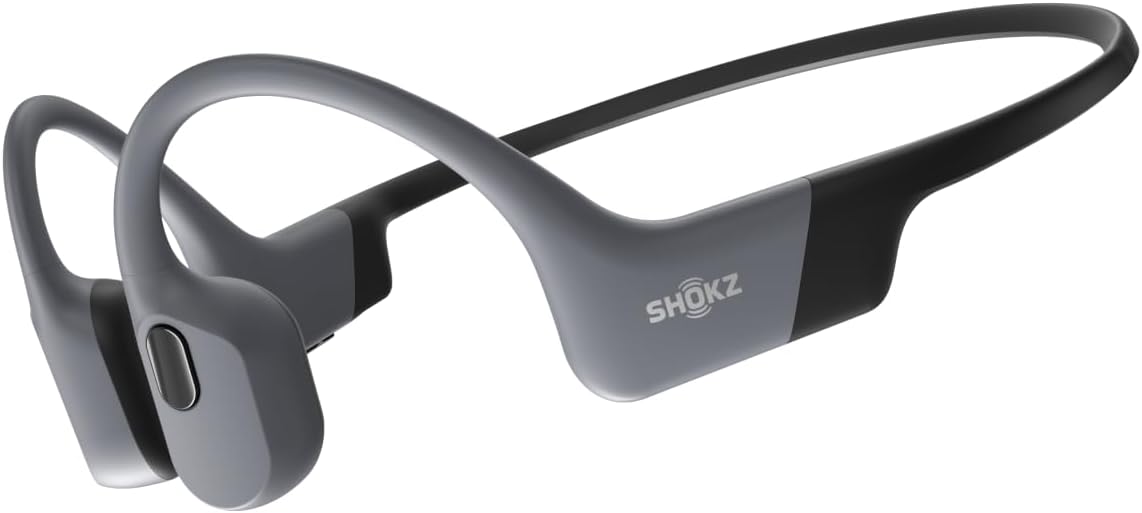
For sportsmen seeking the most advanced level of waterproof protection, the SHOKZ OpenSwim Pro are the ideal bone conduction headphones.Waterproof picks are available here. The IPX8 is functional. Take the safest choice here if you’re racing in open water or in the middle of a triathlon.With an IP68 rating, the OpenSwim Pro is water-resistant.To begin, it is triple-sealed and waterproof to a depth of 2 meters for a duration of 2 hours (IP68). The most stringent requirement here.
Coming up next: MP3 mode when on land and Bluetooth when at sea—8,000 songs available. Poke your head out of the locker. The headphones are set to play your playlist.One last thing: you can use the Shokz App to control the playback and changing modes, and the battery life is 9 hours.Warning: this is the most costly option available. Underwater, Bluetooth won’t function—only supports MP3s. Not even close to a dual driver as Pro.Suitability: open water athletes, triathletes, and lap swimmers. Run on solid ground only.
Things to Consider Before Buying a Bone Conduction Headphone:
Bone conduction technology offers a unique way to listen to audio by transmitting sound vibrations directly through the bones in your skull, bypassing the eardrums entirely. This innovative approach opens up possibilities for those with hearing impairments and enhances situational awareness for others.
The Mechanics of Sound Vibration via the Temporal Bone
Sound vibrations travel through the temporal bone, converting audio signals into mechanical energy. This process allows you to perceive sound without obstructing your ears, resulting in a different listening experience that many find refreshing.
Distinguishing Open-Ear Design from Traditional Drivers
Open-ear designs utilize bone conduction to deliver audio without covering your ears, contrasting sharply with traditional drivers that rely on enclosing or placing speakers in the ear canal. This design enhances comfort and awareness of your surroundings.
Open-ear designs prioritize comfort and auditory awareness, allowing you to engage with your environment while enjoying media. Unlike traditional headphones which can create a sealed sound experience, open-ear models keep you connected to the external world, making them ideal for activities like running or cycling. They also reduce ear fatigue, promoting longer listening sessions without discomfort.
Wireless Bluetooth Models for General Athletics
These headphones offer the freedom of movement without wires, making them ideal for running or working out. Bluetooth connectivity ensures compatibility with most devices, enhancing your fitness experience.
Waterproof MP3 Integrated Units for Swimmers
Designed specifically for swim enthusiasts, these units combine bone conduction technology with MP3 capabilities, allowing you to enjoy your favorite tunes while in the water.
Offering a unique listening experience, waterproof MP3 integrated units are built to withstand immersion while delivering crystal-clear sound. They eliminate the need for external devices, as music can be stored directly on the headphones. This feature enhances your swimming routine without the hassle of cumbersome equipment.
Transducer Quality and Sound Leakage Control
Transducer quality directly affects sound clarity and performance. High-quality transducers deliver clearer audio while minimizing sound leakage, allowing for a discreet listening experience. Check reviews to gauge effectiveness.
Battery Longevity and Connectivity Standards
Battery life influences how long you can enjoy your headphones without recharging. Consider models that offer a balance between longevity and quick charging options alongside compatibility with various connectivity standards, such as Bluetooth.
Evaluating battery longevity involves assessing not just the hours of playback but also the charging time. A promising option should align with your usage patterns, ensuring that frequent interruptions for charging don’t disrupt your activities. Ensure compatibility with the latest Bluetooth standards for a reliable connection.
Advantages in Situational Awareness and Ear Health
Prioritizing safety, bone conduction headphones let you listen while remaining aware of your surroundings. This characteristic is particularly valuable during outdoor activities like running or cycling, reducing the risk of accidents. Plus, since they do not block your ear canals, they help maintain overall ear health by minimizing pressure and potential damage.
Limitations Regarding Bass Response and Ambient Noise
Sound performance often falls short compared to traditional headphones. Bone conduction technology tends to produce weaker bass, which can affect the listening experience for music enthusiasts. Additionally, background sounds may intrude, undermining immersion, especially in noisy environments.
Many users find that the lack of robust bass can make listening to music less enjoyable. While bone conduction headphones excel in situational awareness, they cannot compensate for the depth and richness provided by conventional models. Expect sounds from your environment to blend with audio, which may detract from your listening experience in quiet settings.
Measuring Head Size for Optimal Tension and Comfort
To find the perfect fit, measure your head circumference just above your ears. This measurement ensures that the headphones rest comfortably and securely without causing discomfort during prolonged use.
Matching Technical Specifications to Your Primary Activity
Consider your intended use when selecting specifications such as water resistance, battery life, and Bluetooth range to ensure functionality aligns with your activities.
Selecting the right technical specifications hinges on your primary activity. For workouts, prioritize water and sweat resistance, while casual listeners may focus on comfort and battery life. Evaluate each specification according to how you’ll use the headphones to ensure they perform well in real-world conditions.
Optimizing Audio Settings for Vibration Clarity
Fine-tune your audio settings by adjusting the equalizer to accentuate mid and high frequencies, which enhances vibration clarity. Experiment with presets to find the ideal sound profile that works best with your listening environment.
Proper Maintenance and Storage for Component Longevity
Maintain your headphones by regularly cleaning the components and storing them in a cool, dry place. Avoid exposure to extreme temperatures or moisture to extend their lifespan significantly.
Proper care ensures your headphones perform well over time. Regularly wipe down surfaces with a soft cloth to remove any dust or sweat build-up. Charging them correctly and avoiding prolonged disuse can also help maintain battery health. Storing your headphones in their case can protect them from accidental damage, preserving their integrity and functionality for future use.
Conclusion
Ultimately, consider sound quality, comfort, and battery life before purchasing bone conduction headphones. Assess how they fit into your lifestyle, particularly if you prioritize situational awareness. Evaluate brand reputation and customer reviews to ensure a satisfying experience. Making informed choices ensures the best value for your investment in this technology.
Leave a Reply