
Searching for the best Canon cameras can feel absolutely paralyzing with so many choices available. You deserve a camera that captures stunning images without the headache of endless research. We’ve simplified the process by testing the top Canon mirrorless and DSLR models for every skill level and budget. This definitive guide will help you confidently choose the perfect camera to elevate your photography. Let’s find the right one for you and start creating unforgettable moments.
Contents
- Top 5 Canon Cameras:
- 1. Canon EOS R6 Mark II – Best Canon Camera Overall
- 2. Canon EOS 5D Mark IV – Best Canon DSLR Camera
- 3. Canon EOS R7 – Best Canon Camera for Wildlife
- 4. Canon EOS R50 – Best Canon Camera for Vlogging
- 5. Canon EOS Rebel T7 – Best Budget Canon Camera
- Things to Consider Before Buying a Canon Camera:
- DSLRs
- Mirrorless
- Purpose of Use
- Image Quality
- Lens Compatibility
- Research and Reviews
- Hands-On Testing
- Finalizing Your Choice
- Summing up
Top 5 Canon Cameras:
1. Canon EOS R6 Mark II – Best Canon Camera Overall

Canon EOS R6 Mark II For a camera that’s as quick to keep up with your ideas as you are, the Canon EOS R6 Mark II has you covered. That means you get a 24.2MP sensor that results in sharp, detailed photos with clean images in low light — anywhere indoors and out of the sun. Canon’s advanced processing and in-body image stabilization helps keep images sharp and video steady for impressive results when you’re on the go but want to travel light.
You’ll get action up close without missing a beat. An electronic shutter is capable of an ultra-fast 40 fps, which is ideal for athletes and wildlife and other situations where it’s best to capture a subject in multiple frames while expressing subtle changes. Smart subject tracking isn’t just for people and animals—it can lock onto vehicles and planes, maybe retaining focus on subjects that leave the frame. Change scenes and the camera adjusts — without your having to dive into a menu.
In video, you’re good for long takes all the way to slow-motion speeds. Capture up to 6 hours [xii] of continuous Full HD, create 6K-oversampled, uncropped 4K up to 60p for maximum detail or crystal clean full HD at up to 180p—without overheating concerns cutting your shoot short.
When you’re ready to share, using the camera is easy thanks to 5GHz Wi-Fi and Bluetooth 5 interworking with the Canon Camera Connect app to allow for quick transfer of clips and images or control the camera remotely. If you want a reliable, versatile workhorse that can do still and video better than any other, the R6 Mark II will be right up your alley.
2. Canon EOS 5D Mark IV – Best Canon DSLR Camera

If you are looking for a reliable full-frame DSLR option that will simply work in any situation, the Canon EOS 5D Mark IV is your all-around workhorse upgrade. You start with a 30.4MP full-frame CMOS sensor that offers smooth detail and beautiful color whether you’re shooting in bright sunlight, dingy interiors, or anywhere in between. When action is the name of the game, you can film sharp 4K at 30 or 24 frames per second, or switch to Full HD up to 60fps and HD up to an ultra-smooth 120 fps for those extra-slow slow-motion moments.
You will like the responsive handling and thoughtful controls, which make it easy to dial in your look fast. The versatile metering mechanisms—average, center-weighted, evaluative, partial and spot — help you get shots that retain all their detail and tonality in situations with dramatic lighting. Built in Wi Fi allows you to stay connected on the go and fast upload to share2rs 08993K1 computers and other devices Easily share your images and files One of the camera’s most innovative features, built-in Wi-Fi connectivity is available for quick and easy_Hand Held shooting. You can even move still images and post from your mobile device or in the app.
Combine this with stabilized Canon lenses to maintain stability in hand held shots and steadier video sequences. Whether you’re chasing the red carpet, running around the court, or hiking in the field, you are assured to capture stunning footage and audio for real time editing.
3. Canon EOS R7 – Best Canon Camera for Wildlife
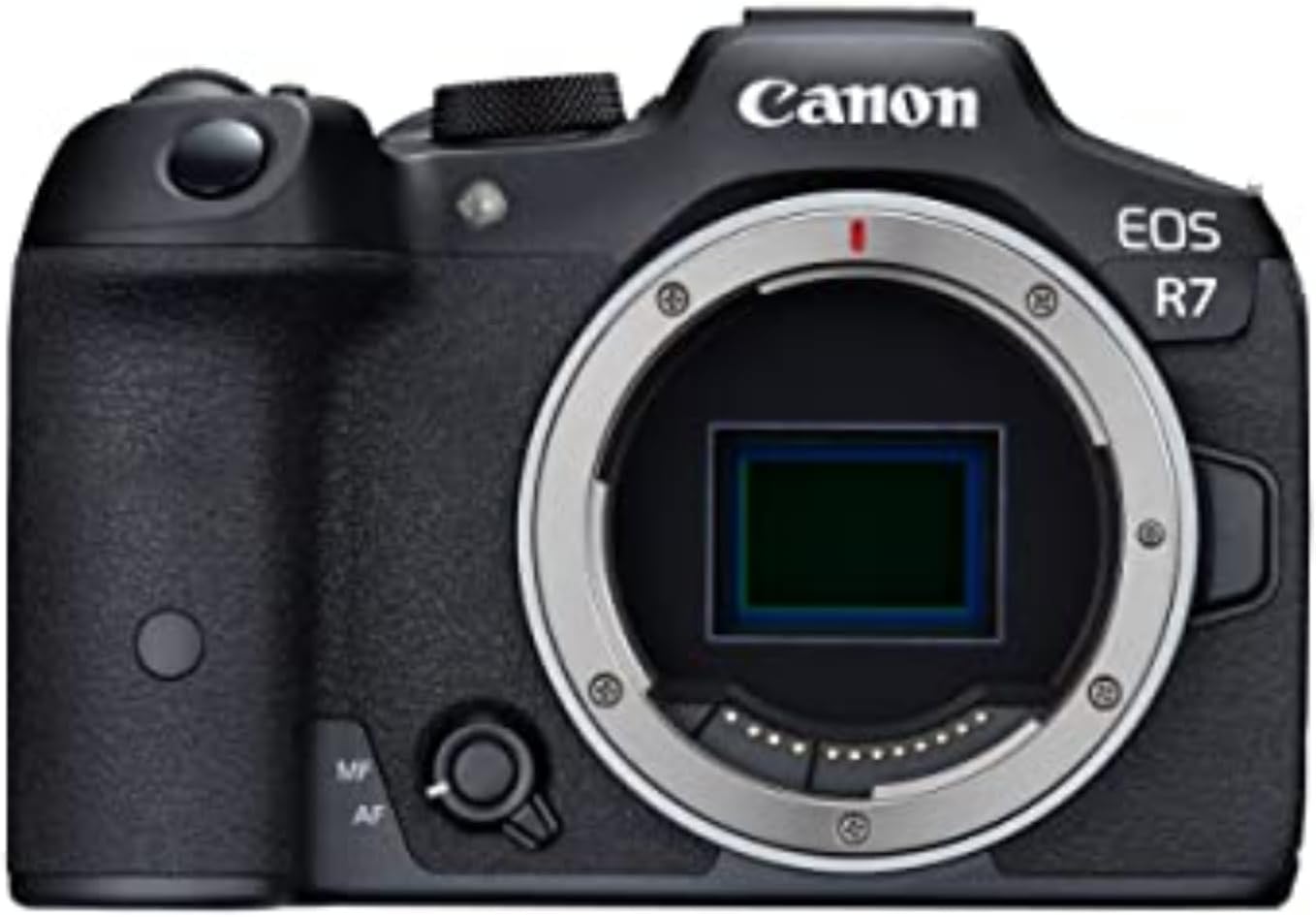
If it’s wildlife that is your primary focus, the Canon EOS R7 provides you with the speed, reach and confidence to nail those fleeting moments. You’re getting a 32.5MP APS-C sensor model that packs a bit more telephoto punch, so it’s easier to fill the frame with distant subjects without having to crop in post production. CMOS AF employs the same sensor-phase-detection concept finally making possible Canon’s celebrated Dual Pixel on-sensor phase detection for full-frame still shooting, with acclaimed Dual Pixel CMOS AF covering up to 100% of pixels in each horizontal and vertical plane2 — bestowing fast, access-to-the-moment focus here.it all comes together in front view — eyes and face and body; rear view — eyes, tail or wings.
And for the decisive moment, the R7 shoots at 15fps with the mechanical shutter or 30 fps electronically – plus RAW Burst that records a moment in time with twice as fast as 0.5-second pre-shooting to capture the moment before you press and hold down the shutter release. A 5-axis in-body image stabilization system compatible with all Depart lenses ensures that your shots are clear whatever you’re doing; when shooting handheld and jitter is detected, the system switches to digital five-axis stabilization for smooth videos.
Video is just as impressive: record 4k UHD with full pixel readout and peripheral pixel readout, with no crop factor or shutter cut that triggers on its own subject: With Movie Servo AF you can continue to track your subject, even when they move and change the composition. Metering options also let you maintain precision in high-contrast scenes, such as backlit skies or dappled light in the forest.
Match the R7 with a versatile zoom lens — say, a RF-S 18–150mm — and you could have an impressively lightweight kit that still goes long when necessary. This body is designed for you, if what you need most is a quick and dependable wildlife setup that matches your instinctive click reflex.
4. Canon EOS R50 – Best Canon Camera for Vlogging

If you’re putting together a vlogging kit that’s quick, nimble and at-the-ready when inspiration strikes, the Canon EOS R50 feels just right in your hand and workflow. You get a 24.2MP APS-C sensor that has both clean detail and accurate color, making your footage look polished right out of the camera. Dual Pixel CMOS AF II is here, covering 100% x 100% of the frame with over 6100 AF points., so you can focus and track your subject while knowing it will remain in focus wherever you choose to position it in the frame.
When moments come at you fast, the R50 shoots up to 12 fps with Electronic First Curtain or 15 fps with the electronic shutter — ideal for pulling out sharp thumbnails and behind-the-scenes stills between video takes. In less-than-ideal light, Advanced A+ Assist expands scene detection to compensate for exposure and color so your night shots look bright and your backlit subjects look crystal clear.
For video, you can shoot 6K oversampled uncropped 4K at up to 30 fps for crisp detail, and Full HD at up to 120 fps for slow motion. Creator fav Close-up Demo Mode: Stand in front, hold a product with your hand and look right at the lens to immediately shift focus from what’s close to you (and back) without having to access a menu. Thanks to the 2.36 million-dot EVF and vari-angle Clear View LCD II, framing low or high-angle shots is a breeze and evaluative metering keeps exposure levels correct for the perfect scene.
Whether you’re looking to record like a pro without the size, weight and complex navigation that comes with it, or have better tools for more engagement from your audience by being able to hit the record button with ease, EOS R50 makes it possible for you.
5. Canon EOS Rebel T7 – Best Budget Canon Camera

If you are looking for a cost-friendly entry into interchangeable-lens photography, the Canon EOS Rebel T7 will give you the basic tools to get started without an overabundance of features. Its 24.1MP APS-C sensor provides optical-quality images and true-to-life video, so you can capture all those share-woke photos and videos that the smartphone photographers envy.
You’ll compose through to a bright optical viewfinder and rely on flexible metering — evaluative, center-weighted, partial and spot — to help keep exposures consistent in difficult light. Combined with the 18-55mm kit lens, you have a useful 3× zoom range that can cover everything from a wide group shot to tighter portraits. Lens-based image stabilization stabilizes both your stills and video when you’re using slower shutter speeds.
Sharing and control are simple. With the built-in Wi-Fi and NFC, you can easily transfer your images to your smartphone or other devices, as well as upload them to the internet. Want a more polished livestream or conference call? The hit to Canon’s sale will come from their “free” Webcam Utility, a simple executable you can run on the T7 do it up as a great fixed (it has no HDMI or USB-C output) but high-quality webcam in only minutes.
With the adjustable shutter-speed wheel and many of the same dials, knobs and buttons as professionals use to get just the shot you want on your fiftieth try, progressing from practicing the exposure triangle to experimenting with composition, lenses and more remains friendly but allows for potential growth. Seeking reliable image quality, an intuitive control layout and simple connectivity at a beginner-friendly price, this camera is a smart place to start — and one you’ll continue turning to as your skills grow.
Things to Consider Before Buying a Canon Camera:
Canon cameras span entry-level to professional ranges, so you should define your budget and primary uses first; evaluate sensor size, autofocus and low-light performance, video capabilities, lens availability and compatibility, ergonomics, and connectivity. Balance immediate needs with future expansion, check warranty and service options, and, if possible, test models hands-on to confirm they fit your shooting style and workflow.
DSLRs
You’ll find DSLRs like the EOS 90D or 5D Mark IV offer optical viewfinders, robust ergonomics, and exceptional battery life (often 800–1200 shots). They use the EF lens ecosystem, so if you already own glass it preserves investment and AF performance with pro telephotos. Expect heavier bodies and excellent phase-detect AF for stills, making them a solid choice for sports, wildlife, and long-location shoots where uptime matters.
Mirrorless
You can choose mirrorless models such as the EOS R5 (45MP) or R6 (20MP) for electronic viewfinders, in-body stabilization, and fast burst rates—R5 delivers high-resolution stills and 20 fps electronic shooting while R6 favors low-light speed. Dual Pixel CMOS AF provides wide coverage and reliable subject tracking, and bodies are generally smaller, making them convenient for travel and hybrid photo/video work.
Digging deeper, the EOS R line spans APS-C (R7 at 32.5MP, R10 at ~24MP) to professional bodies (R3/R5), and offers 4K/60p on mid models and 8K/30p on the R5 for demanding video projects. You should note RF lenses exploit a short flange distance to achieve faster apertures and novel designs (e.g., RF 28–70mm f/2), and the EF-EOS R adapter keeps full AF compatibility with legacy glass while you transition systems.
Purpose of Use
If you shoot sports or wildlife, prioritize high continuous fps (10–20+), fast AF tracking, and telephoto reach; for video, aim for 4K/60 or 4K/120 and good heat management; for landscape or commercial work, target 30–50+MP sensors like the 45MP R5. You should match body choices to typical shooting scenarios so you don’t overpay for features you won’t use.
For deeper context: if you shoot weddings, prioritize low‑light ISO performance, reliable eye AF, and dual card slots for instant backups—cameras like the R6 II (strong low‑light AF and ~24MP) fit well. Travel shooters often favor lighter APS‑C bodies such as the R10 with kit zooms to save weight. Landscapers benefit from high‑resolution bodies and stitching workflows; pairing a 45MP body with a 16–35mm prime and tripod delivers files suitable for large prints and retouching.
Image Quality
You want a sensor that matches your priorities: a 45MP Canon R5 delivers fine detail for large prints, while a 20–26MP R6-style sensor often wins for low-light shooting with larger pixels and less noise. Pay attention to dynamic range (stops of highlight/shadow recovery), base ISO performance, and RAW file latitude; lenses and in-camera processing (DIGIC processors) also shape final sharpness and color rendition.
Lens Compatibility
You need to map lenses to bodies: Canon uses RF for mirrorless, EF/EF‑S for DSLRs. EF and EF‑S lenses mount to RF bodies with an EF‑EOS R adapter while retaining AF and IS, though EF‑S optics are optimized for APS‑C coverage. Check whether your favorite primes and zooms (24–70mm f/2.8, 70–200mm f/2.8, 50mm f/1.2) exist in RF versions or rely on adapters.
For deeper planning, note the RF mount’s 20mm flange focal distance versus EF’s 44mm, which lets designers create faster, sharper RF optics like the RF 50mm f/1.2 and RF 24‑70mm f/2.8L. You should weigh adapter costs and added bulk against buying native RF lenses—native designs typically give faster AF, better edge performance, and future-proofing; third‑party makers (Sigma, Tamron) increasingly offer RF options too.
Research and Reviews
You should consult hands-on reviews on DPReview, Imaging‑Resource, and channels like Gerald Undone or Tony & Chelsea Northrup for measured tests (AF tracking, dynamic range). Pay attention to lab data—buffer depth, read noise, DxOMark-style rankings—and user reports about issues such as early EOS R5 8K overheating. Use aggregated scores plus 20–50 user comments to spot consistent strengths or recurring problems.
Hands-On Testing
You need to try the camera yourself: shoot RAW at your typical ISO, run continuous bursts at the model’s max fps, and record 4K/60 video to check for heat limits. Bring the lenses you use (24–70mm f/2.8, 70–200mm f/2.8) and simulate the scenarios you shoot most—portraits at f/1.8, sports at 1/1000s—to validate AF, buffer, and handling before deciding.
When testing, allocate a full day: start with static high-resolution files (evaluate sharpness and noise at ISO 100–3200), then move to action sequences shooting 20–30 second bursts to test buffer and AF tracking, and finish with a 10–20 minute continuous 4K/60 clip to monitor thermal behavior. Note battery drain over 4–8 hours and whether menus and button layout suit one‑handed operation; log specific metrics like usable shot count per battery and time-to-overheat when recording high‑bitrate video.
Finalizing Your Choice
When you’ve narrowed to two or three models, compare real-world RAW files, test autofocus tracking with moving subjects, and weigh ergonomics with the lenses you’ll actually use. Also confirm return windows, warranty length, and authorized-dealer status so you can exchange or service the body if needed. Pick the option that reliably delivers the images and handling you require.
Dig deeper by downloading RAW samples from reviewers to evaluate noise at ISO 3200–12800 and inspect 100% crops for detail and sharpening artifacts. Try renting the body and primary lens for a day to assess battery life and handling under actual shooting conditions. If buying used, check shutter count and service history—sub-50,000 shutter actuations typically indicates substantial remaining life on many Canon bodies—and verify the seller’s reputation before finalizing the purchase.
Summing up
As a reminder, when buying a Canon camera you should balance your budget, the lens and accessory ecosystem, sensor size and resolution, autofocus and video capabilities, ergonomics and battery life, and future upgrade paths; test handling in person, check warranty and support options, and weigh new versus used bodies so your final choice fits the types of photos and workflows you plan to pursue.
Leave a Reply