
Best Heated Vests are a must for anyone tired of shivering on hikes or at work. Our gear-tested team reviews battery-powered options and insulated designs so you can stay warm without bulky layers. You’ll love the cozy, powerful warmth that restores cold-day freedom-it’s a game-changer for outdoor fans. We promise clear, honest picks that save time and money. Keep reading for the top models and smart buying tips.
Contents
- Top 7 Heated Vests:
- 7: Dr. Prepare Heated Vest (Battery Pack Not Included)
- 6: KOVNLO Men’s Heated Fleece Vest with 8 Heating Panels
- 5: Sevdiea Men’s Heated Vest with 16000mAh 7.4V Battery
- 4: ORORO Men’s Heated Fleece Vest, 4-Zone Heating Layer
- 3: Venustas Men’s Heated Fleece Vest with 6 Heating Zones
- 2: ORORO Men’s Quilted Heated Vest
- 1: Venustas Men’s Heated Vest, Up to 20 Hours of Warmth
- Things to Consider Before Buying a Heated Vest:
- Carbon Fiber vs. Graphene Heating Elements
- Integrated Battery vs. Universal USB Power Systems
- Battery Voltage and Runtime Expectations
- Heat Zone Distribution and Placement
- Measuring for Optimal Thermal Transfer
- Assessing Layering Compatibility and Mobility
- Limitations Regarding Battery Weight and Charging Needs
- Battery Health and Electrical Safety Precautions
- Final Words
Top 7 Heated Vests:
7: Dr. Prepare Heated Vest (Battery Pack Not Included)
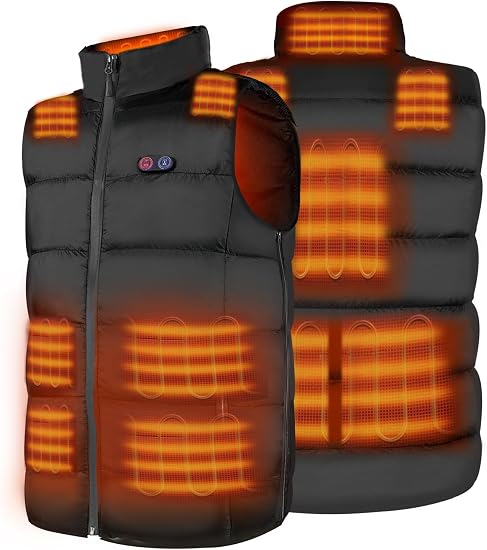
The Dr. Prepare Heated Vest is an excellent choice for those looking for affordable heated gear.Because most people aren’t confident in their abilities, they never give one a go. This answers your question.To start, it has 5.5 inches of adjustable side zip area, so you may wear it under a shell or over a hoodie.Coming up next: a 7.4V heating port—it uses higher-voltage packs that heat up more quickly than regular USB vests.
You won’t have to scrape the wiring by hand when you wash it because of the provided laundry bag.The lack of a battery pack is a con. It relies on heat rather than insulation due to its thin filling. Customers feel they got a good deal.Who it’s best for: newcomers to the market, owners of 7.4V packs, etc. Not for: those who prefer a consolidated package.
6: KOVNLO Men’s Heated Fleece Vest with 8 Heating Panels

The most cost-effective option that comes in a ready-to-wear state is the KOVNLO Men’s Heated Fleece Vest.Some inexpensive vests have a bright chest button that lets you know it’s hot, but they don’t have batteries.One feature is the eight carbon-fiber panels distributed across the collar, front, and back. These panels can be individually switched.Afterward, there are three heat settings: 149, 131, and 113 degrees, and the package also includes a 10000mAh battery.
At long last, there’s stealth mode, when the heat remains on but the indication lights go out.Drawbacks: lengthy days require turning it down because it only lasts two or three hours on high. Fleece is impervious to both water and wind.Particularly well-suited for: early risers, dog walkers, and commuters. Avoid during: extended periods of outdoor activity when you’re at its highest.
5: Sevdiea Men’s Heated Vest with 16000mAh 7.4V Battery

The greatest option for managing heat dissipation is the Sevdiea Men’s Heated Vest.Even though your chest is unaffected by the breeze, your back becomes numb. The majority of vests either heat up or out.To start, there are two separate switches that control the front and rear, and each of them has three settings ranging from 113 to 149 degrees.The following are eight areas that will be heated in around three seconds: the back, neck, chest, abdomen, and waist.
At last, you won’t have to worry about a dead phone anymore thanks to the 16000mAh 7.4V pack’s dual function as a power bank.Downside: Opening your outer layer is required for adjustment since the switches are located on the vest. The sizing is small, according to buyers.Those who ride, deliver, or otherwise work with their backs to the wind will benefit the most from this. Avoid: buttons with just one function.
4: ORORO Men’s Heated Fleece Vest, 4-Zone Heating Layer

The ideal mid-layer to wear under your own coat—the ORORO Men’s Heated Fleece Vest.No vest here isn’t vying to be your go-to outerwear. No, that is incorrect if your jacket is neatly folded.The foundation must be a thin, low-bulk fleece construction that can be boundless when zipped over a shell.After that, there are four heating zones that are important for when you take your gloves off: the collar, the middle back, and both hand pockets.
Lastly, just about no heated clothing advertizes a rating of 50 wash cycles or more.Downside: Fleece isn’t windproof, so you’ll need to wear a shell when you’re outside. Compared to less expensive vests, this one has fewer zones.Ideal for: anyone with a decent coat, craftsmen wearing high visibility, and similar situations. Used for: outerwear that stands alone.
3: Venustas Men’s Heated Fleece Vest with 6 Heating Zones

Optimal choice for full-body coverage—the Venustas Men’s Heated Fleece Vest.As far as vests go, the most of them only heat a strip along the back. Body temperature remains low over the neck, shoulders, and chest.The first is a set of six heating panels—collar, shoulders, chest, and back—that are about 30% bigger than the category standard.Now we’ll talk about heating up the collarbone, which is typically concealed by a scarf.
Lastly, there’s a little 36Wh battery that can last 6 hours on medium, 3 hours on high, and 10 hours on low.The lack of separate control and the fact that one button cycles all six zones are drawbacks. The buyer has complained that the battery pouch pulls on the hem.Those with a chilly disposition or whose shoulders and necks are the first to go might like this. Used for: switching zones individually.
2: ORORO Men’s Quilted Heated Vest

If you have to keep a low profile indoors, the ORORO Men’s Quilted Heated Vest is a great choice.An item of equipment is a fleece vest that has a battery pack. Okay in a construction zone. Meets with little success.One thing: it looks like any other vest thanks to its quilted and low-bulk design; no electronics branding whatsoever.After that, there are four carbon fiber heating zones: the collar, the middle back, the pockets, and each of those zones has its own button that controls three different heat levels.
The last point is that it can be worn in either direction: as an outer layer in moderate cold weather or as a mid-layer under a jacket in subzero temperatures.Drawbacks: 4 zones is not a lot. There is no separate control for the front and back. Just a heads up, the quilted shell won’t keep water out entirely.Good for: people who spend a lot of time in and out of buildings, drivers, and commuters. Prohibited: prolonged standing in subzero temperatures.
1: Venustas Men’s Heated Vest, Up to 20 Hours of Warmth

The Venustas Men’s Heated Vest, designed for use on days when it’s dark outside and provides warmth for up to 20 hours, is the best heated vest in 2026.Heat rationing is required by every other vest in this store. To make it last longer, you can run it low or bring a spare.First, with a single charge, all six zones may stay warm for up to twenty hours straight. Otherwise, the length is unmatched.The second component is a 74Wh battery, which has a capacity of around 20,000mAh and can be fully charged in just three hours. By the end of the day, you will have a fully charged battery.
The third feature is six heating zones, which are 30% bigger than the average and include collar heat.A quilted nylon shell, which resists wind rather than absorbing it like fleece, is the fourth feature.Regrettably, all six zones can still be cycled with the flick of a button. The heaviest component here is that 74Wh pack, and the 20-hour estimate is based on low heat.Who it’s best for: people who work outside, fish on ice, or whose days start and conclude at nite. Avoid: brief travel times.
Things to Consider Before Buying a Heated Vest:
Over the past few years, heated vests have gained popularity among outdoor enthusiasts and commuters alike. Before making a purchase, it’s vital to evaluate factors such as insulation type, battery life, and intended use to ensure you choose the right option for your needs.
Carbon Fiber vs. Graphene Heating Elements
Carbon fiber heating elements are renowned for their lightweight nature and efficient heat distribution. Graphene, on the other hand, offers rapid heating and impressive durability. Each option has distinct benefits that align with different user preferences and activities.
Integrated Battery vs. Universal USB Power Systems
Integrated batteries often provide a streamlined experience with built-in power solutions, ensuring ease of use. In contrast, universal USB power systems enhance flexibility, allowing you to utilize existing power banks or chargers. Assessing your charging habits will influence your choice.
Integrated batteries typically deliver a more compact design, which can enhance portability and convenience. By having the battery sewn directly into the vest, you eliminate the need for external power sources, making it ideal for outdoor adventures. But if you regularly rely on USB chargers, a universal system might allow for longer usage without the need to recharge as often. Some brands even support both options, providing versatility for various situations.
Battery Voltage and Runtime Expectations
Battery voltage and runtime are significant determinants of performance. A higher voltage could translate to increased heating capacity, while runtime dictates how long you can enjoy warmth before needing a recharge.
Heat Zone Distribution and Placement
Placement of heating elements plays a critical role in how effectively the vest warms you. Consider vests that offer adjustable heat zones which allow for tailored comfort based on personal preferences and environmental conditions.
Heat that is distributed unevenly can lead to discomfort or cold spots. Look for vests with strategically placed heating panels, typically around the core areas like the chest and back. Models that allow individual zone adjustments give you the flexibility to focus heat where it’s needed most, enhancing overall wearability, especially in colder climates.
Measuring for Optimal Thermal Transfer
Accurate measurements enhance thermal efficiency. A snug fit promotes better heat retention, reducing the chance of cold air seeping in. Proper measurement techniques ensure heat is distributed evenly across your torso.
Assessing Layering Compatibility and Mobility
Choose a heated vest that accommodates additional layers comfortably. Selecting a size that allows some room ensures you can wear it over thermal shirts or under heavier jackets with ease.
A vest with mobility in mind should feature a design that does not restrict arm movement. From winter hiking to daily commutes, unrestricted mobility enhances your experience. Look for adjustable features and flexibility in the fabric, ensuring your layering strategy remains functional. For outdoor activities, ensure your vest aligns with your intended use, facilitating ease of movement without hindering warmth.
Limitations Regarding Battery Weight and Charging Needs
Battery weight and charging requirements can hinder long-term comfort and usability. Depending on the design, you may feel the extra heft during prolonged wear, which could lead to discomfort.
Charging needs also require planning, particularly for extended outdoor activities. Many heated vests may take hours to fully charge, limiting their practicality on a day trip. A power bank can extend battery life but may add additional weight as well, which is something to consider when planning your outdoor adventures. Balancing these factors will enhance your overall experience with heated outerwear.
Battery Health and Electrical Safety Precautions
Prioritize battery maintenance by avoiding complete discharges. Always recharge your vest after use, keeping connections clean and dry to prevent corrosion.
Monitoring battery health extends the usability of your heated vest. Regularly inspect connectors for wear and tear, and avoid exposing the battery to extreme temperatures. Using original chargers aids in maintaining efficiency and minimizes risks, ensuring you can rely on your vest when needed most.
Final Words
Purchasing a heated vest requires careful consideration of factors such as battery life, insulation quality, and sizing. Evaluate how each feature meets your specific needs and intended use. Selecting the right vest not only enhances comfort in cold conditions but also adds a practical element to your outdoor gear collection.
Leave a Reply