
Finding the best hiking backpacks shouldn’t feel like a heavy chore that ruins your outdoor weekend plans. Are you tired of sore shoulders and sweaty backs after just a few miles? You deserve high-quality trail gear that feels weightless while keeping your essentials organized. Our guide reveals the ultimate outdoor gear to transform your next trek into a breathtaking, painless adventure. Let’s explore the top-rated packs that will redefine your journey.
Contents
- Top 5 Hiking Backpacks:
- 1. Osprey Atmos AG 65 – Best Hiking Backpack Overall
- 2. TETON Sports Explorer 75 – Best Large-Capacity Hiking Backpack
- 3. Osprey Aether 65 – Best Heavy-Load Hiking Backpack
- 4. COR Surf Dry Bag Backpack – Best Waterproof Hiking Backpack
- 5. Loowoko 50L Hiking Backpack – Best Budget Hiking Backpack
- Things to Consider Before Buying a Hiking Backpack:
- Lightweight Daypacks for Short Excursions
- High-Volume Packs for Multi-Day Trips
- Calculating Necessary Volume and Capacity
- Evaluating Fabric Durability and Water Resistance
- Internal vs. External Frame Stability
- The Versatility of Frameless Ultralight Options
- Hydration Compatibility and External Tool Loops
- Proper Cleaning and Drying Techniques
- Safe Storage to Maintain Material Integrity
- Conclusion
Top 5 Hiking Backpacks:
1. Osprey Atmos AG 65 – Best Hiking Backpack Overall

The Osprey Atmos AG 65 is an excellent choice if you’re looking for a hiking backpack that can withstand long days of trekking in comfort and adapt to changing weather conditions with ease. Even when your load changes throughout the day, the Fit-on-the-Fly harness and hipbelt allow you to fine-tune the fit as you move. This ensures that the pack feels sturdy and balanced. More energy for the route, less weariness, and less rubbing are the results of an adjustable fit, which is especially important when hiking in layers or while ascending or descending.
The integrated raincover keeps your pack and necessities dry in the event that the weather suddenly turns bad. Your insulation and extra clothing won’t be damp, and you won’t have to fumble for a separate cover.
The arrangement and access are designed to be user-friendly when hiking. For easy access to the main compartment and to reach gear without emptying everything, there are large, curved side-zip openings on both sides.
Included as well is hydration. You can cleanly route a drinking tube thanks to the internal reservoir sleeve and the center rear exit port, allowing you to sip regularly and keep on pace without stopping. You can carry wisely, stay comfortable, and keep moving confidently with this pack, whether you’re planning bigger day treks or multi-day vacations.
2. TETON Sports Explorer 75 – Best Large-Capacity Hiking Backpack

The TETON Sports Explorer 75 is an affordable, roomy, and long-lasting option for hikers in need of a large-capacity backpack that can manage heavy loads without appearing overly complex. With its gender-neutral design and balanced carry, it ensures that hikers of all shapes and sizes can remain stable even when the route lengthens and their load increases.
One of the most significant advantages is the fit. Particularly for medium-to tall-statured individuals, the multi-position torso adjustment allows for a more secure and comfortable carry. Having a better fit is important for multi-day journeys because it reduces shoulder stress and keeps the weight where it should be.
Long days on the trail won’t be a problem thanks to the supportive open-cell foam lumbar pad and the sculpted channels that let air circulate more freely. If you’re climbing, sweating, or hiking in warmer temperatures, that combo will assist you stay cooler by reducing pressure points.
Everything you need for a camping trip is neatly stored. You won’t have to rummage through your belongings in search of anything you need when you’re camping thanks to the roomy compartments and numerous pockets. A big sleeping bag compartment keeps your sleep system separate and easy to access. The whole hike feels more controlled and comfortable thanks to the multi-directional compression straps, which assist maintain your load and prevent it from shifting as you move.
3. Osprey Aether 65 – Best Heavy-Load Hiking Backpack
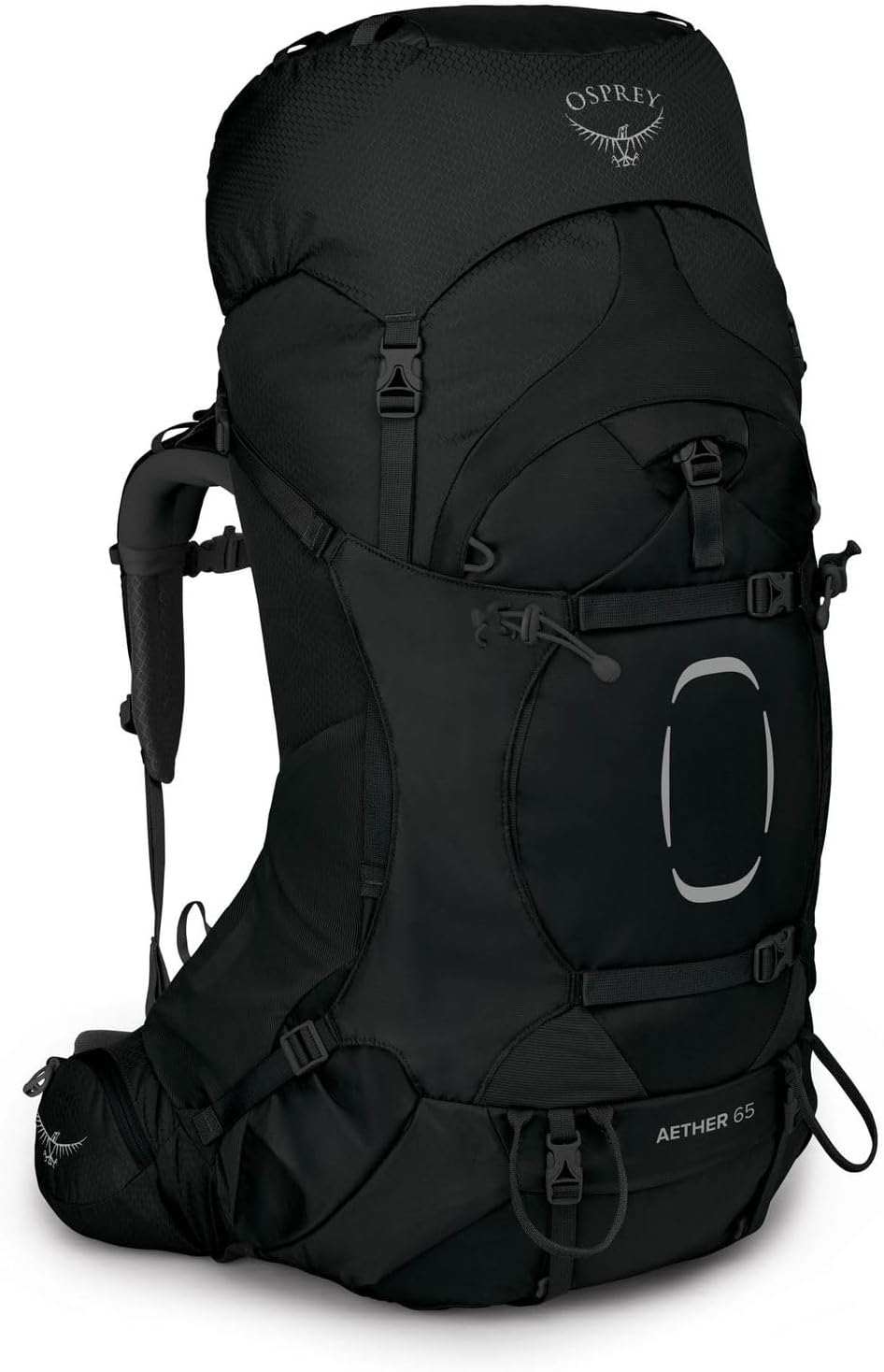
If you frequently hike with bigger loads and are looking for a pack that remains stable on steep or technical trails, the Osprey Aether 65 is designed to provide you with support for miles to come. The main perk is the adjustable torso length, Fit-on-the-Fly shoulder straps, and Fit-on-the-Fly hipbelt, so you can get the perfect fit every time. This allows you to find the perfect fit for your body, alleviate pressure areas, and ensure that your hips, rather than your shoulders, bear the load.
The shape of the Aether makes it easier to maintain your balance when carrying a heavy load, such as an additional supply of food, water, or clothing during colder weather. On rough terrain, tight switchbacks, or uneven descents, where shifting weight may wear you down fast, that close-to-body carry makes a big difference.
A lack of breathability should not be sacrificed for comfort. You can stay cool on lengthy climbs and warm-weather walks with the AirScape suspension, which uses an injection-molded, die-cut foam backpanel to offer a supportive fit while yet allowing ventilation.
You can rest assured that your belongings, including your clothing and sleeping system, will be protected from the elements thanks to the attached raincover. For camp organizing, there’s a zippered section for your sleeping bag that keeps all of your sleep items separate. The detachable divider allows you the freedom to pack however you choose. If you’re looking for a pack that won’t sag when you put actual weight on it, this is it.
4. COR Surf Dry Bag Backpack – Best Waterproof Hiking Backpack

The COR Surf Dry Bag Backpack is intended to withstand water, dirt, and unpredictable weather, so your goods will be protected even under the worst situations. Your clothing, electronics, and necessities will remain dry in inclement weather because to its sonically welded seams and roll-top clasp, which form a completely waterproof and dirtproof seal.
Choose the capacity that suits your routine—25L for days when you don’t need a lot of space and 40L for days when you need. Regardless, it can withstand snow, wind, storms, and damp situations with ease. The interior is designed for practicality, with features like a padded laptop sleeve for everyday use, and it works equally well for bike commuting or travel.
Both longevity and ease of wear are prioritized in the design. The bag’s ergonomic shoulder pads with breathable mesh will keep you comfortable and the bag’s heavy-duty PVC material will keep it smelling fresh for longer. An adjustable compression strap and a chest buckle allow you to fasten heavier or bulkier goods to the top of the bag. Added features include mesh side pockets for easy access to belongings and reflective accents for nighttime visibility.
This backpack is perfect for both your outdoor and everyday needs; take it with you on hikes, camping vacations, gym sessions, commutes, and weekend getaways.
5. Loowoko 50L Hiking Backpack – Best Budget Hiking Backpack

The Loowoko 50L is an affordable option for hikers looking for a dependable backpack that can handle multi-day adventures without sacrificing comfort. You can pack with confidence knowing that this updated version has stronger straps, longer-lasting zippers, and enhanced materials.
With the rain cover that comes with it, you’ll be even more protected from bad weather. The polyester and nylon used to make the pack are tear-resistant, so it can take a beating from the path and still look good. When it rains, the rain cover will keep the elements out of your belongings.
It remains lightweight and pleasant for use in the outdoors due to the absence of an internal frame. Extended walks will be more comfortable because to the ventilated back panel, padded, breathable mesh shoulder straps, and expanded S-style straps.
The strength lies in the organization. You can keep your essentials organized in the roomy main compartment, which also serves as a shoe compartment, and your grab-and-go necessities close at hand in the six outside pockets.
It is a sensible option for journeys lasting three to five days, with 50 liters of space and a weight of about 2.1 pounds. You should check your airline’s policies before your flight to ensure that it fits inside their carry-on limits, as it is sized appropriately.
Things to Consider Before Buying a Hiking Backpack:
Buying a hiking backpack requires careful thought. You need a pack that fits your body and suits your adventures. Consider capacity, fit, and features to ensure comfort and functionality on the trail. Your choice impacts your hiking experience directly.
Lightweight Daypacks for Short Excursions
These smaller packs are ideal for quick trips where you only need imperatives like water, snacks, and a light jacket. You will find them comfortable for a few hours on the trail. Their compact size makes them easy to carry.
High-Volume Packs for Multi-Day Trips
Larger capacity packs are imperative for adventures requiring more gear, food, and clothing. You will appreciate the extra space when packing for several days. These packs often feature robust suspension systems. You will find that high-volume packs, typically ranging from 50 to 80 liters or more, are engineered to distribute heavy loads comfortably over long distances. These packs often incorporate advanced harness systems, adjustable torso lengths, and hip belts designed to transfer weight effectively to your hips, reducing strain on your shoulders. Look for multiple access points, such as bottom compartments for sleeping bags and large front zippers, which make organizing and retrieving gear much simpler during extended trips. Many also offer external attachment points for items like sleeping pads or tents, expanding their carrying capacity even further.
Calculating Necessary Volume and Capacity
Your pack’s capacity directly relates to your trip’s duration and gear. Assess how much equipment you’ll realistically need for day hikes versus multi-day expeditions. Overpacking leads to unnecessary strain; underpacking leaves crucials behind. This balance is key for efficient packing.
Evaluating Fabric Durability and Water Resistance
The material of your backpack dictates its resilience against the elements. You should look for fabrics that can withstand abrasions from rocks and branches. Water resistance is also key to keeping your gear dry during unexpected downpours. This protects your belongings and extends the pack’s lifespan. Selecting a backpack with appropriate fabric durability and water resistance is not just about convenience; it’s about protecting your crucial gear and ensuring your safety in varying weather conditions. Materials like Cordura or Ripstop nylon offer excellent resistance to tears and punctures, standing up to the rigors of rugged trails. A high Denier count often indicates greater durability, while a DWR (Durable Water Repellent) coating or integrated rain cover provides an extra layer of protection against moisture. You need a pack that can shrug off light rain and offer a fighting chance against a sudden cloudburst, keeping your sleeping bag, extra layers, and food dry.
Internal vs. External Frame Stability
Internal frames hug your body, providing a stable, close-to-the-back carry, which is excellent for challenging terrain. External frames, on the other hand, separate the load from your back, offering superior ventilation and often a more structured feel, particularly with very heavy or awkwardly shaped gear.
The Versatility of Frameless Ultralight Options
Frameless packs prioritize minimal weight and maximum flexibility, appealing to experienced ultralight hikers. They conform to your body and the packed contents, making them incredibly adaptable for lighter loads. This design requires careful packing to maintain comfort and stability. These minimalist packs excel on shorter trips or for hikers meticulously curating their gear to keep total weight low. You gain significant weight savings, which translates to less fatigue over long distances. However, the lack of a rigid frame means your sleeping pad or other firm items often serve as the “frame,” necessitating a thoughtful and often precise packing strategy to prevent sagging or discomfort. They are less forgiving of poorly distributed weight compared to framed alternatives.
Hydration Compatibility and External Tool Loops
You will want a pack that supports your hydration strategy. You can easily attach trekking poles or ice axes with external loops. These features keep vital items within reach and secure.
You will appreciate a dedicated sleeve for a hydration reservoir, often with an exit port for the drinking tube. This design allows you to stay hydrated without stopping to retrieve a water bottle. Many packs also feature external attachment points, such as daisy chains or compression straps, which are perfect for securing extra layers, sleeping pads, or even a small tent. You will find these loops invaluable for carrying larger, awkwardly shaped items that do not fit inside the main compartment, keeping your hands free on challenging terrain.
Proper Cleaning and Drying Techniques
Always remove all contents before cleaning your pack. You should hand wash it with mild soap and lukewarm water, paying close attention to zippers and buckles. Make sure to rinse thoroughly to remove all soap residue. Allow it to air dry completely in a shaded, well-ventilated area.
Safe Storage to Maintain Material Integrity
Store your backpack in a cool, dry place away from direct sunlight. You should avoid extreme temperatures, which can degrade fabrics and coatings over time. Hanging it or laying it flat prevents creases and maintains its shape. You will preserve your backpack’s structural integrity and water resistance by storing it correctly. Direct sunlight causes UV damage, fading colors and weakening synthetic materials. Extreme heat can melt or warp internal frames and plastic components. Cold temperatures can make materials brittle, leading to cracks or tears. Keeping it away from damp environments prevents mildew and unpleasant odors, which are difficult to remove once established.
Conclusion
As a reminder, you must carefully evaluate your hiking needs and preferences before purchasing a backpack. Consider the pack’s capacity, fit, and features to ensure it aligns with your planned adventures. A well-chosen backpack enhances comfort and efficiency on the trail, making your outdoor experiences more enjoyable. Make an informed decision to find the perfect pack for you.
Leave a Reply