
Finding the best laptops for Linux shouldn’t be a frustrating nightmare of broken drivers and blank screens. You deserve a powerful machine that handles open-source software perfectly. We tested top models to guarantee seamless hardware compatibility with popular distros like Ubuntu. Stop fighting with your computer and start enjoying a smooth, reliable experience today. Let’s look at the ultimate winners that work right out of the box.
Contents
- Top 5 Laptops for Linux:
- 1. ASUS Vivobook S16 AI Laptop
- 2. Microsoft Surface Laptop
- 3. HP Envy x360 2-in-1 Laptop
- 4. Lenovo IdeaPad 3 Laptop Computer
- 5. Dell Inspiron 15 Business Laptop
- Things to Consider Before Buying a Laptops for Linux:
- Ultrabooks
- Gaming Laptops
- Budget-Friendly Options
- Hardware Compatibility
- Performance Requirements
- Checking for Linux Support
- Choosing the Right Distribution
- Advantages of Linux
- Potential Drawbacks
- Driver Problems
- Software Compatibility
- Conclusion
Top 5 Laptops for Linux:
1. ASUS Vivobook S16 AI Laptop

The ASUS Vivobook S16 AI is a powerful laptop that can run Linux and has a ton of internal storage for all your media and games needs. Working late at night or in dim light is a breeze with the illuminated keyboard and 16-inch screen, which are ideal for coding, terminals, spreadsheets, and creative tasks. With 32 GB of RAM, your system will not feel crowded when running demanding programs like IDEs, several browser sessions, Docker containers, and virtual machines.
There is storage, which is a major plus. For those who would rather not deal with external storage, a 2 TB solid-state drive (SSD) provides ample space for big projects, local repositories, media assets, and numerous development environments. AMD’s lightning-fast Ryzen AI 9 365 CPU powers day-to-day performance with 10 cores, designed to remain responsive even when multitasking or doing computationally intensive tasks.
Integrated graphics are also yours, and they work great for general-purpose content creation, productivity, and battery life. Plus, the hardware is up-to-date, so it can function well with Linux workflows like dual-booting, running a virtual machine, or using development tools that are Linux-based.
You should verify that Linux is compatible with the specific Wi-Fi chip, audio, and function keys you use, as it comes with Windows 11. However, this Vivobook is an excellent choice for anyone looking for a powerful, spacious laptop that can manage intensive multitasking and data-intensive tasks without breaking the bank.
2. Microsoft Surface Laptop

If you’re looking for a sleek, contemporary laptop that packs a punch and has excellent battery life—and you intend to use Linux tools in addition to Windows—the Microsoft Surface Laptop is a great choice. Equipped with 16 GB of RAM and the Snapdragon X Elite, it’s made to handle ordinary tasks quickly, multitask well, and handle AI-accelerated workloads with ease. While maintaining a focus on security and privacy, that additional AI capability can make specific productivity features and supported apps feel faster and more effective.
For those times when you need a premium, portable device that can handle coding, research tabs, and documents with ease, the 13.8-inch touchscreen with HDR capabilities and sleek design is an excellent choice. You won’t have to worry about running out of space for big projects, media libraries, virtual environments, or separate workspaces when you have up to 1 terabyte of storage.
Surface Laptop’s battery life is designed to keep you going—with a maximum of 20 hours, it can withstand long workdays, travel, and campus life without worrying about finding an outlet.
Using Linux command-line tools, containers, or development environments through Windows-based choices might be particularly beneficial for Linux users whose workflow is heavily dependent on Linux. It is wise to verify compatibility with your intended Linux configuration and applications before using Snapdragon, since it is an ARM platform.
3. HP Envy x360 2-in-1 Laptop

The HP Envy x360 is an excellent choice if you’re looking for a versatile 2-in-1 laptop with a large screen for both work and play, and it can perform Linux-friendly workflows. When you’re writing, checking logs, running multiple terminals side-by-side, or juggling many browser tabs, the spacious 16-inch display becomes a lifesaver. You can multitask with ease, work on bigger projects, access virtual environments, and store a lot of data locally with 16 GB of RAM and a 1 TB drive—all without having to clean up after yourself.
The Intel Core Ultra 5 125U, designed for efficient multitasking and quick everyday performance, is the foundation of performance. It keeps your system responsive while you compile, run dev tools, stream, and switch between jobs with 12 cores and a turbo boost of up to 4.3 GHz. Keeping power consumption low while effortlessly handling normal creative and media tasks, the integrated graphics are a practical match for productivity and general use.
You can adapt the laptop’s use to your day-to-day activities thanks to its x360 design. When you need to take notes, make presentations, or do some light web surfing, you can switch it to tablet or tent mode. When you’re ready to get down to business, you can switch it back to laptop mode. Even with Windows 11 Pro’s improved management and security, Linux users need still verify that Windows 11 is compatible with their chosen distro and that essential hardware is supported for a trouble-free installation.
4. Lenovo IdeaPad 3 Laptop Computer

The Lenovo IdeaPad 3 is an economical and practical option if you’re looking for a Linux-ready laptop with a large screen and lots of RAM. Whether you’re coding, having a terminal open while reading documentation, or running numerous windows side by side without cramping, the 16-inch display makes everyday work easier.
You get respectable speed for everyday tasks, programming, and multitasking in general with an integrated graphics and Intel Core i7 processor, all while keeping power consumption acceptable. Notable among its features is the 32 GB of RAM, which provides more room for demanding Linux processes such as several browser tabs open at once, Docker containers, virtual machines, integrated development environments, and more.
Also, the storage is evenly distributed. Your operating system, applications, and a good number of projects may all fit on a 512 GB drive, which also keeps boot speeds and program launches fast. You don’t necessarily require an external disk right away if you keep big media files or numerous development environments locally.
If you use your laptop for both business and play, having HD audio is a great perk to have every day. It enhances calls, films, and music. And because it comes preinstalled with Windows, you may customize it to fit your setup by choosing between dual-booting, running Linux in a virtual machine, or accessing Linux tools through Windows-based alternatives. This way, you can create a workflow that suits your actual workflow.
5. Dell Inspiron 15 Business Laptop
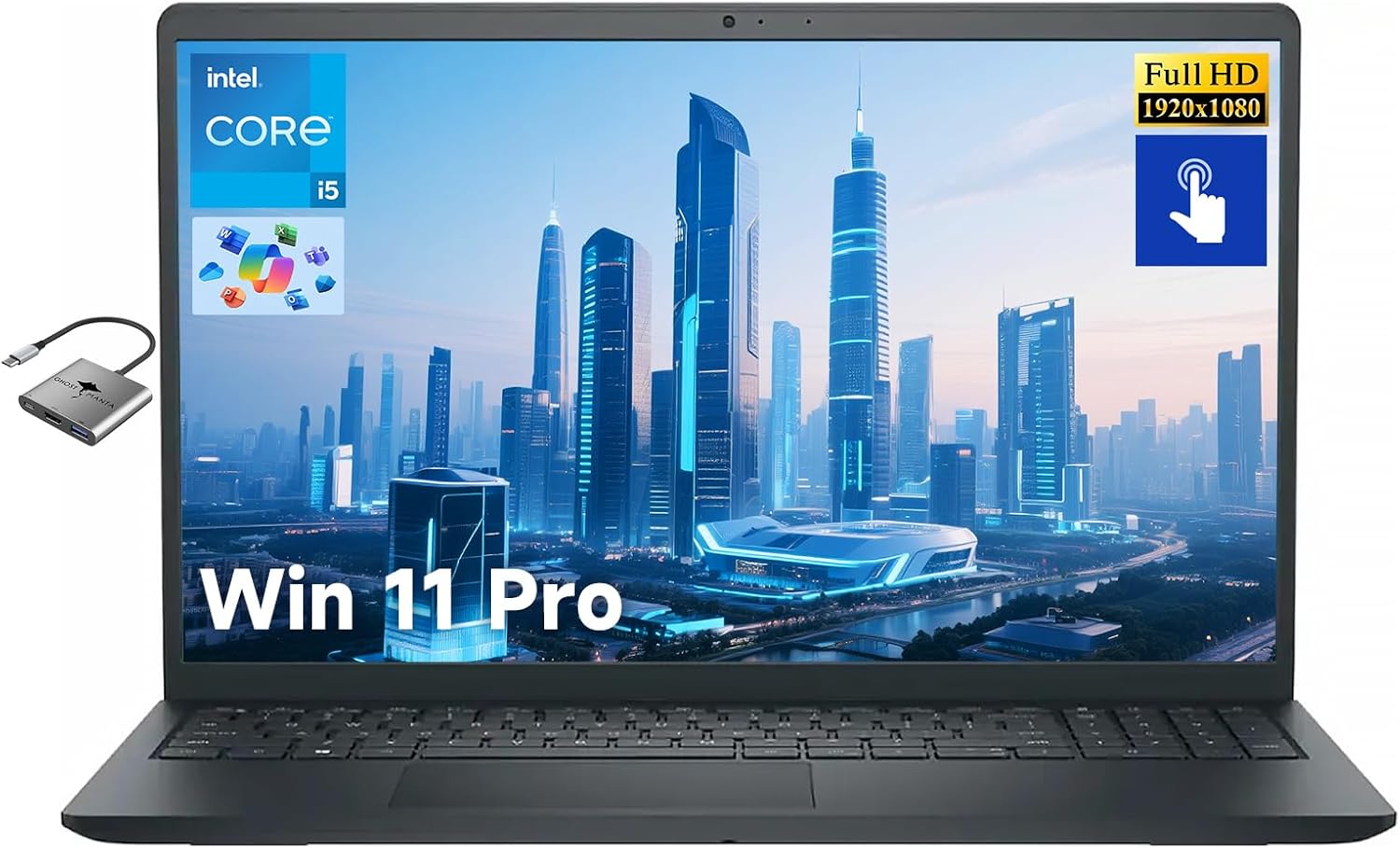
The Dell Inspiron 15 Business Laptop is an affordable and reliable option for school, office, and general productivity if you’re looking for a laptop that can tackle Linux-friendly work. You may run many applications, browser tabs, and documents simultaneously without experiencing any lag thanks to the Intel Core i5-1334U processor. Your system will boot fast, open apps with ease, and have enough room for all of your data, projects, and vital software with 16GB of RAM and a 512GB PCIe SSD.
The anti-glare, micro-edge design aids in reducing distractions in brighter surroundings, and the 15.6-inch Full HD touchscreen provides more flexibility while navigating through lengthy pages, reviewing slides, or conducting rapid edits. Whether you’re on the go for work or school, this portable workstation’s lightweight design and energy-efficient hardware can keep you connected-free for longer, even on the busiest of days.
When it comes to connectivity, Wi-Fi 6 makes it easier to maintain consistent speeds even on busy networks, and Windows 11 Pro brings additional management and security tools. Extras like high-definition audio and a memory card port come in handy for transferring files from various devices, such as cameras.
With a little research into touchscreen, Wi-Fi, and distro-specific driver compatibility, an Intel-based machine like this can be a good place to start if Linux is your ultimate objective.
Things to Consider Before Buying a Laptops for Linux:
Just assess hardware compatibility, driver and kernel support, and distro friendliness so you avoid install headaches; check CPU, GPU, Wi-Fi, Bluetooth, touchpad, and sleep/resume behavior, confirm firmware and Secure Boot policies, evaluate battery life, storage and upgrade paths, and verify community and vendor support to keep your Linux laptop reliable.
Ultrabooks
You’ll find ultrabooks (e.g., XPS 13, Framework, X1 Carbon) ideal if you prioritize battery and portability; many ship with Intel Evo or Ryzen U-series offering 8-16GB RAM and NVMe SSDs, so installations of Ubuntu, Fedora, or Pop!_OS typically work out of the box, though Wi‑Fi driver quirks with some Intel/Realtek chips can require a kernel update or firmware blob.
Gaming Laptops
You should expect discrete NVIDIA or AMD GPUs, high-refresh panels (120-240Hz), and 6‑8 core CPUs in gaming laptops; Steam Proton runs well on modern hardware, but NVIDIA Optimus setups often need driver configuration (NVIDIA driver + PRIME) and occasional kernel compatibility checks to avoid suspend/thermal issues.
You can optimize gaming laptops by using the latest kernel and GPU drivers (NVIDIA 510+ or Mesa 22+ for AMD), enabling PRIME offload for battery life, and choosing distributions with easy driver management like Pop!_OS or Ubuntu; Valve’s Proton has shown strong performance on RTX 20/30 series, though anti-cheat and Vulkan compatibility can still block a handful of titles.
Budget-Friendly Options
You can get solid Linux performance from refurbished ThinkPads or entry models (Acer Swift 3, Lenovo IdeaPad) in the $250-$600 range by upgrading to an SSD and 8-16GB RAM; lightweight desktops such as Xfce or LXQt and distros like Linux Mint or Xubuntu make these machines responsive despite modest CPUs.
You should plan to check soldered RAM on very cheap models, prioritize NVMe/SSD upgrades over eMMC, and consult distro hardware lists or community threads for model-specific tweaks-community-tested examples include ThinkPad T460/T470 and the Acer Swift 3 Ryzen variants, both noted for easy driver support and upgrade paths.
Hardware Compatibility
Check kernel and firmware compatibility for each component: Intel AX200/AX201 Wi‑Fi works on kernels 5.10+ out of the box, while Broadcom chips like BCM43xx typically require proprietary blobs and extra packages; Nvidia cards run Nouveau with limitations unless you install NVIDIA drivers for CUDA and full OpenGL, and some Realtek audio or fingerprint sensors need vendor or community drivers. You should test suspend/resume, battery levels, and webcam functionality from a Live USB before buying.
Performance Requirements
Match hardware to your workflows: for web development and light container work a 4‑core/8‑thread CPU (e.g., Intel i5‑1340P or Ryzen 5 5600U) with 16 GB RAM performs well, while heavy parallel builds, VMs, or data tasks benefit from 6+ cores and 32 GB. NVMe storage (PCIe 3.0/4.0) lowers compile and VM startup times. Also factor in sustained thermal performance so the CPU can keep turbo clocks during long jobs.
Pay attention to sustained TDP and storage throughput: a 15-28 W design improves battery life but may throttle under prolonged compiles, whereas 35-45 W laptops sustain higher clocks; NVMe drives typically deliver 1,500-3,500 MB/s sequential reads (PCIe 3.0/4.0) versus ~500 MB/s for SATA SSDs, which materially speeds disk‑bound tasks. If you plan GPU workloads, confirm VRAM (6-16 GB) and Linux driver support for your chosen card.
Checking for Linux Support
You should verify out‑of-the-box support for Wi‑Fi (Intel AX200/AX201 typically works), Bluetooth, GPUs (NVIDIA often needs proprietary drivers), sleep/resume, and function keys by checking distro hardware lists and vendor Linux pages; absence of official support increases the likelihood of kernel tweaking or waiting for newer kernels.
You should perform practical checks before buying: search for your exact model plus the distro name to find install reports, test a live USB to confirm suspend/resume, Wi‑Fi, webcam, and fingerprint behavior, and ensure required kernel versions (newer hardware may need 5.x/6.x kernels) or proprietary drivers are available for full functionality.
Choosing the Right Distribution
Pick a distro that matches your priorities: Ubuntu LTS gives five years of support and broad hardware drivers, Fedora provides cutting‑edge kernels useful for very new hardware, and Debian Stable offers conservative stability with releases roughly every 2 years. If you want easier rolling updates, try Manjaro or Pop!_OS; for learning, Arch gives granular control but needs more setup. Check distro forums for your exact laptop model-community threads often list which Wi‑Fi and GPU work out of the box.
Advantages of Linux
You gain fast, low‑overhead performance and granular control: package managers (apt/dnf/pacman) let you roll back updates, LTS kernels provide stability for servers and laptops, and distros like Ubuntu/Fedora/Manjaro cover a wide hardware range. You can also repurpose older laptops-installing a lightweight DE often restores usable performance on machines with 4-8 GB RAM.
Potential Drawbacks
You may hit device driver gaps or lack native versions of professional apps; for example, Adobe Creative Cloud and some Windows‑only engineering suites won’t run natively, forcing you to use Wine, Proton, or VMs. Graphics stacks for NVIDIA often need proprietary drivers, which can complicate suspend/resume and kernel upgrades.
To mitigate these drawbacks you should test with a live USB, search model‑specific compatibility (e.g., “Ubuntu + XPS 13”), and prefer vendors that offer Linux variants (Dell Developer Editions, some Lenovo ThinkPads). Also check whether your GPU is Intel/AMD (better upstream support) or NVIDIA (may require nVidia‑proprietary driver and DKMS installations), confirm Wi‑Fi chipset support, and plan for potential manual tweaks to power management, Secure Boot, or firmware updates.
Driver Problems
NVIDIA GPUs typically need the proprietary nvidia-driver package (e.g., 515, 530 series) for best performance, while AMD works well with amdgpu on kernel 5.x/6.x; Broadcom Wi‑Fi and some Realtek Ethernet chips may need out‑of‑tree drivers or DKMS builds. If Secure Boot blocks modules, you will sign or disable it, and you should run lsmod, modinfo and dmesg to trace missing firmware or kernel symbol errors when troubleshooting.
Software Compatibility
Many desktop apps run fine, but specialized Windows software, certain games, and some commercial audio/DSP tools require Proton, WINE, or a VM. You’ll encounter missing 32‑bit libs for older apps, and containerized formats (Flatpak/Snap) can introduce sandboxing issues with hardware access. Check upstream compatibility notes for Android Studio, Docker, Steam and any proprietary vendor binaries before committing to hardware.
Test compatibility with a Live USB and install the exact distro version you plan to use; that reveals missing codecs, GPU acceleration issues, or kernel incompatibilities. For stubborn cases, consider using Flatpak/AppImage, a lightweight VM, or a distro with a newer kernel from the vendor PPA/mainline to get the required drivers and libraries without heavy system changes.
Conclusion
Presently, when selecting a laptop for Linux you should prioritize hardware compatibility, open-source driver support, sufficient RAM and storage, and a reputable vendor policy for returns and warranty; evaluate CPU performance, battery life, and keyboard/trackpad quality, and verify Wi‑Fi, Bluetooth, and function-key support to ensure your system runs smoothly and receives long-term updates.
Leave a Reply