
Best Singer Sewing Machines can solve your frustration with slow, confusing gear and help you sew like a pro. Our hands-on reviews and buyer-tested picks show reliable, beginner-friendly models with handy stitch options and embroidery features. You’ll feel the joy of fast, flawless sewing and save time on every project. We promise clear guidance and honest picks to fit your budget and skill. Read on to find your perfect machine.
Contents
- Top 7 Singer Sewing Machines:
- 7: SINGER MX60 Lightweight & Portable Sewing Machine
- 6: SINGER M3330 Sewing Machine
- 5: SINGER 4432 High Speed Heavy Duty Sewing Machine
- 4: SINGER Heavy Duty 4523 Next Evolution Sewing Machine
- 3: SINGER 6700C Heavy Duty Computerized Sewing Machine
- 2: SINGER Smart Heavy Duty 9120 Computerized Sewing Machine
- 1: SINGER Quantum Stylist 9960 Computerized Sewing & Quilting Machine
- Things to Consider Before Buying a Singer Sewing Machine:
- Mechanical vs. Computerized Models
- Specialized Embroidery and Serger Options
- Stitch Selection and Customization
- Motor Power and Internal Frame Construction
- Advantages of the Singer Ecosystem
- Potential Drawbacks and Limitations
- Daily Cleaning and Needle Replacement
- Professional Servicing and Part Replacement
- Final Words
Top 7 Singer Sewing Machines:
7: SINGER MX60 Lightweight & Portable Sewing Machine

Even on a shoestring budget, the Singer MX60 is the ideal entry-level sewing machine.Not studying a handbook, but hemming pants and fixing a seam. The MX60 simplifies everything.As a first step, you can set the stitch length and width for each of the 57 options. Everything is pre-set; all you have to do is turn the dial, choose a stitch, and start sewing.After that, a sturdy metal frame housed in a lightweight body will allow for consistent, skip-free stitching across several layers.
At long last: a little frame that’s only around eleven pounds. Take it with you to your sewing lesson and put it away afterward.Downside: you can’t adjust the width or length of the stitches. Needle threader not available. Needs more embellishment for quilting or thick denim.Who it’s best for: novice seamstresses, pupils, and urgent repairs. Not suitable for: heavy textiles or embellishments.
6: SINGER M3330 Sewing Machine
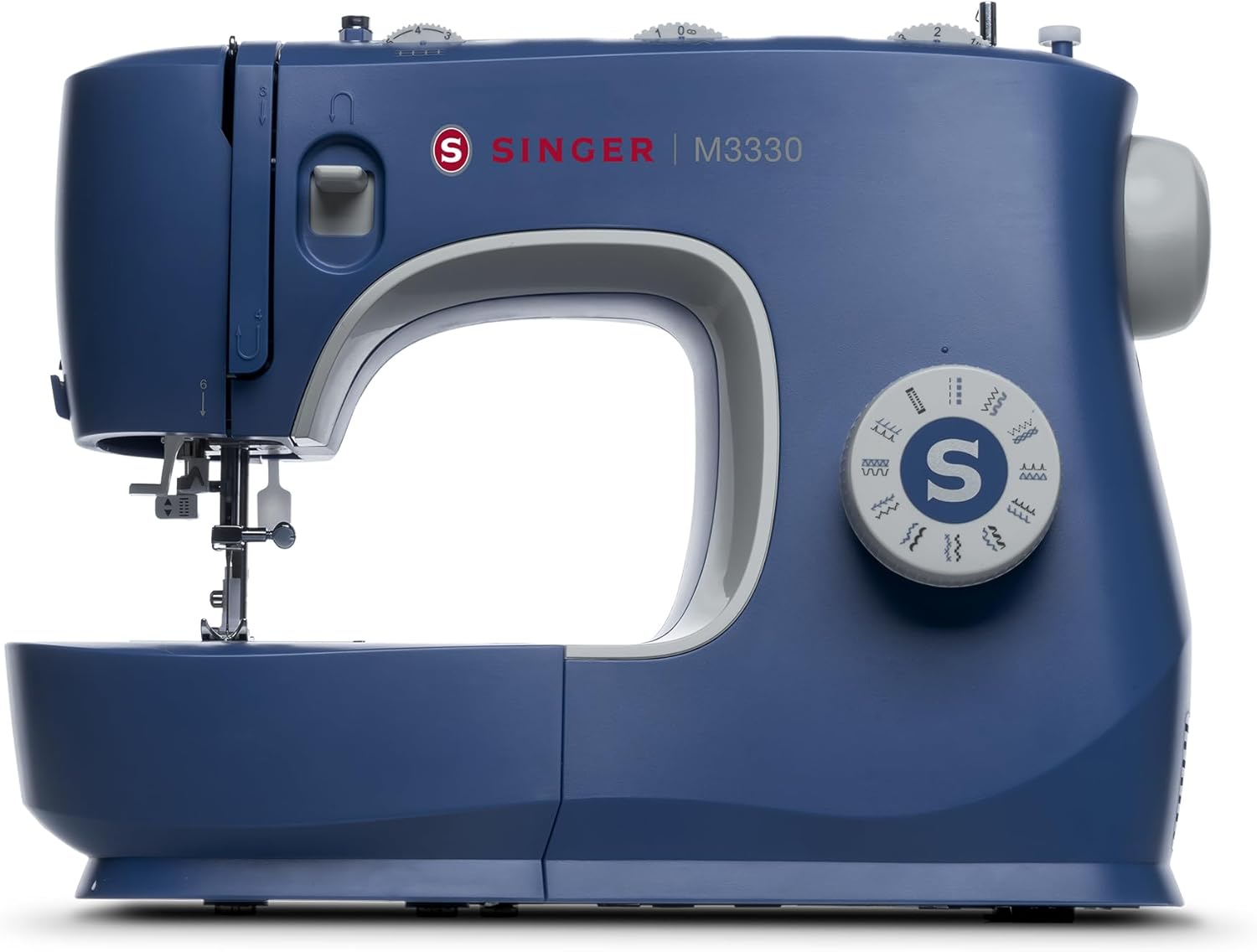
If you’re just starting out with sewing but want to upgrade, the Singer M3330 is a great choice.For about a month, preset machines are comfortable. The next step is to choose between a longer stitch and a neater buttonhole. The M3330 has ample space for expansion.To begin, there are 23 pre-programmed stitches that you can alter in width and length; this is more than enough for use with stretch fabrics, applique, and decorative projects.
A one-step buttonhole and an integrated needle threader are up next. Both of the tasks that newcomers find most daunting are taken care of by the machine.At last: 5.7 inches of stitching space and a free arm. The hems, sleeves, and cuffs all slide on with ease.The front-loading bobbin is more difficult to handle than the drop-in kind. Simple dial controls; no display. Unsuitable for denim stacking.Intended users: novices with growth aspirations, casual sewers. Does not work with automated stitching or jobs involving hefty fabrics.
5: SINGER 4432 High Speed Heavy Duty Sewing Machine

The finest model in Singer’s Heavy Duty series, the 4432 Heavy Duty.Small machines stop on the hem of a pair of pants. Both the needle and the thread show signs of hesitancy. The 4432 is designed to work with that specific fabric.A strong motor that can sew up to 1,100 stitches/minute is the first need. Denim and canvas, which have piercing force, finish quickly with long seams.After that, a sturdy metal framework. When heavy cloth passes under the needle, it maintains the machine’s stability.
The last component is a transparent top drop-in bobbin. You can see how much thread is left and it resists jams.The only way to control the speed is using the foot pedal, which is a drawback. An anxious novice may find that top speed too sudden.Ideal for: those who sew bags, home decor, and jeans. Avoid if you want a screen or are working with fine details.
4: SINGER Heavy Duty 4523 Next Evolution Sewing Machine

For the most precise and commanding Heavy Duty results, choose the Singer Heavy Duty 4523 Next Evolution.For straight seams, raw speed is ideal. Stitches won’t hold on a curve. Fixing that is the 4523.To start, there’s a brand-new DC motor that can rip through layered, thick, and flexible fabrics with ease, all while being supported by a sturdy metal inner frame.Here we go: regulating the speed. To maintain accuracy when sewing curves and corners, adjust the maximum sewing speed to your liking. For longer seams, open it all the way to 1,000 threads per minute.
A drop feed and pressure-adjustable presser feet allow for free-motion quilting, the last feature. Tools for actual method on a mechanical device.Lower peak speed compared to previous Heavy Duty models is a drawback. It’s modest to use 23 stitches. Fonts and screens are absent.Those who are new to sewing garments, are taking it slow with heavy fabrics, or are learning to free-motion stitch would benefit the most from this method. Those who prefer monograms or ornamental stitches may not enjoy this.
3: SINGER 6700C Heavy Duty Computerized Sewing Machine

When it comes to Singer’s Heavy Duty computerized machines, the 6700C is without peer.Power is available by mechanical dials, however they only have a handful of stitches. A brain is added to the 6700C while keeping the muscle.To start, there are 411 stitch applications to choose from, including basic, stretch, and ornamental stitches. An integrated typeface is also available for adding monograms to towels, bags, and other items.The next step is an LCD screen that displays the stitch you’ve chosen, along with a speed control to save fragile fabrics.
The motor is powerful enough to pierce denim, leather, and heavy quilting layers, and there are seven different designs of one-step buttonholes to compliment it.Downside: you’re limited to just one typeface. This package does not include an extension table.If you’re a sewist looking for power and variety in your work, you might like making monograms. Not suitable for novices seeking simplicity or quilters requiring a spacious work surface.
2: SINGER Smart Heavy Duty 9120 Computerized Sewing Machine

If you are a sewer who prefers to let your phone handle the thinking, then you need the Singer Smart Heavy Duty 9120.Problems arise in projects while trying to match different fabrics with the appropriate stitch, foot, and settings. An app is entrusted with such task by the 9120.To begin, there is app-based control. Transform your phone into a sewing machine control center with a free software for iOS and Android. Preview your stitches before you sew and modify settings with ease.What follows is a collection of over 200 stitches with instructions. If you use this app, it will advise you on which presser foot and settings are best for your cloth.
At long last, it’s ready to be stitched. This very machine can sew your own unique designs if you purchase the embroidery attachment (sold separately).Disadvantage: the package does not include the attachment needed for embroidery. The reliance on your phone is significant.This one is the heaviest at over 18 pounds.Ideal for: seamstresses who are acquainted with technology, students who learn best with guidance, and those who aspire to become embroiderers. People who would rather sew without a phone should not use this.
1: SINGER Quantum Stylist 9960 Computerized Sewing & Quilting Machine

As Singer’s most comprehensive sewing and quilting machine, the Quantum Stylist 9960 is our top pick for best sewing machine.Whether it’s power without diversity or variety without accessories, every machine here demands a sacrifice. No, the 9960 isn’t.The first is the 1,172 stitch applications that 600 built-in stitches provide. You can shape them into your own designs using mirror imaging and thread elongation.Second, there is an in-built lettering type for monograms and bespoke text, in addition to thirteen completely automated one-step buttonhole designs.
Finally, a speed-control button that also acts as a start/stop button round out the set. When quilting takes a long time, it’s nice to not have to use the foot pedal.Lastly, there are thirteen presser feet, a sizable extension table for quilts, and a sturdy dust cover in the package.Drawbacks: the most expensive item here. It takes a lot of practice to master 600 stitches. Stitching is not an option.Quilters, clothing makers, and ambitious amateurs will find this the best. Those on a tight budget or who aren’t very good at sewing might reconsider.
Things to Consider Before Buying a Singer Sewing Machine:
Choosing the right Singer sewing machine can significantly impact your sewing experience. Understanding the various models available, alongside their features, helps you make an informed decision. Prioritize your specific needs and preferences to ensure that your new machine meets your creative goals and sewing ambitions.
Mechanical vs. Computerized Models
Mechanical models provide a tactile sewing experience, allowing for manual adjustments and straightforward operation. They often consist of simple dials and levers, making them user-friendly for those new to sewing. Computerized options enable more intricate designs with a higher level of automation, incorporating features like LCD screens and one-touch stitch selection. Choosing between these types depends on your comfort level with technology and the complexity of projects you wish to tackle.
Specialized Embroidery and Serger Options
Embroidery machines specifically focus on decorative stitching, integrating designs that can be downloaded or sewn directly from built-in patterns. These models often include hoops for precise positioning and intricate detailing. Serger machines, essential for those working with knit or stretch fabrics, create professional-looking seams while also finishing edges to prevent fraying. Selecting these specialized options adds versatility to your sewing toolkit, enabling creativity in various fabric types and projects.
Stitch Selection and Customization
Evaluating stitch selection is essential for tailoring projects to specific needs. Most Singer sewing machines offer a variety of stitches, including utility, decorative, and stretch options. The ability to customize stitch length and width adds versatility, allowing you to achieve professional results on different fabrics. Some models even come with programmable options that enable you to save your favorite stitch settings. This flexibility makes it easier to adapt to various sewing techniques, whether working on garments or home décor projects.
Motor Power and Internal Frame Construction
Motor power plays a significant role in determining how well a machine handles different materials and tasks. A strong motor allows for smooth operation, even at high speeds, making it easier to sew through thick fabrics. In tandem with motor strength, the internal frame’s construction affects durability and stability. A solid frame tends to withstand wear and tear, contributing to a longer lifespan. Investing in a model with robust motor power and quality construction pays off in terms of reliability and functionality over time.
Advantages of the Singer Ecosystem
Noteworthy benefits within the Singer ecosystem include a wealth of available resources, such as instructional manuals and online tutorials. These materials cater to both novices and experienced sewists, making it easier to master various techniques. A vibrant community of Singer enthusiasts fosters sharing of tips, patterns, and project ideas, enhancing your sewing journey. This robust support system plays a significant role in maintaining enthusiasm and skill development.
Potential Drawbacks and Limitations
Challenges often arise with certain Singer models, particularly those manufactured with lighter materials. While these machines can provide portability and ease of use, they might lack the sturdiness required for heavy fabrics. Some users express concerns about the durability of specific plastic components as opposed to traditional metal. Understanding these limitations helps set realistic expectations for performance and longevity, crucial for a worthwhile investment.
Daily Cleaning and Needle Replacement
Cleaning your machine daily enhances its performance and prolongs its life. After each sewing session, you should remove any lint from the bobbin compartment and the needle plate, using a soft brush or cloth. Regular needle replacement is also essential; a dull needle can damage fabric and affect stitch quality. Changing your needle every few projects, or sooner if you notice issues, will maintain optimal stitch performance and prevent fabric snagging.
Professional Servicing and Part Replacement
Scheduling professional servicing at least once a year ensures that your Singer machine operates at peak performance. Trained technicians can identify and fix issues that may not be evident during routine maintenance. During these appointments, they can also replace worn parts, which is essential for preventing more significant problems down the line. Investing in professional care can save you money in repairs and prolong the machine’s useful life considerably.
Final Words
Making an informed decision when purchasing a Singer sewing machine involves careful consideration of various factors. Evaluate your sewing needs, the machine’s features, and how it fits your budget. Understanding the brand’s reputation for durability and support can provide peace of mind after your purchase. Also, researching model-specific reviews can offer insights into real user experiences. A well-considered choice will enhance your sewing journey, transforming projects into rewarding experiences.
Leave a Reply