
Choosing the best smart smoke detectors is the ultimate way to protect your family from hidden dangers. Forget those annoying midnight chirps and the constant fear of missing an alarm while you’re away. Our guide features top-rated fire safety tools that send instant mobile alerts to your phone. You deserve this life-saving protection and absolute peace of mind. Here are the top models to keep your household secure today.
Contents
- Top 7 Smart Smoke Detectors:
- 7: Heiman Matter Smart Photoelectric Smoke Detector
- 6: First Alert Smoke and CO Alarm (SMICO100)
- 5: Kidde Smart Smoke Detector (Ring App, Battery-Powered)
- 4: Kidde Smart CO Detector + Indoor Air Quality Monitor
- 3: SimpliSafe Smoke & Carbon Monoxide Detector
- 2: First Alert SC5 Battery Smart Smoke & CO Alarm
- 1: First Alert Hardwired Smoke Detector with LED Strobe
- Things to Consider Before Buying a Smart Smoke Detector:
- Smart Home Ecosystem and Protocol Compatibility
- Mobile App Features and Remote Notification Reliability
- Enhanced Safety Benefits and Integration Advantages
- Initial Investment Costs and Connectivity Dependencies
- Determining Optimal Placement and Device Count
- Network Configuration and Sensor Calibration Procedures
- Routine Testing and Sensor Cleaning Protocols
- Managing Battery Cycles and Firmware Updates
- Summing up
Top 7 Smart Smoke Detectors:
7: Heiman Matter Smart Photoelectric Smoke Detector

If you’re looking for a certified smart alarm but don’t want to risk it with a generic product, the Heiman Matter Smart Smoke Detector is a great option.The issue with low-priced Wi-Fi detectors is that in their haste to achieve a low price, most of them forego actual safety certification. Despite receiving an app, there is no evidence that the sensor is functional.Heiman bridges that chasm.
At this pricing point, you have three layers of certified safety—UL 217, FCC, and California Fire Marshal certification. Quite unusual.Following that, we have Matter over Thread, which is compatible with Apple HomeKit, SmartThings, and Home Assistant and operates locally rather than on the cloud.
And lastly, less false alarms thanks to dual-beam photoelectric sensor, which distinguishes between shower steam and real smoke.Drawbacks: Only smoking allowed, no carbon monoxide. Neither Google Home nor Alexa are compatible with this. A Matter hub is required.Preferred by: Renters and Apple Home users. Contraindicated with: chemical odor mitigation.
6: First Alert Smoke and CO Alarm (SMICO100)

The SMICO100 Smoke and CO Alarm by First Alert—the ideal battery combination for homes seeking reliable detection independent of apps.Smart detectors are effective, but Wi-Fi isn’t necessary in every area. There are times when you just need a detector that is always accurate and doesn’t require any kind of setup.It is provided by First Alert.
First, an integrated smoke and carbon monoxide detector; photoelectric sensing picks up on simmering fires, and the electrochemical CO detector picks up on the silent killer that the majority of detectors fail to pick up on.The next step is a system called Precision Detection that can lessen the number of false alerts caused by cooking steam.
Lastly: it’s battery-operated and doesn’t require any wiring; it can be quickly and easily mounted on the ceiling and used anyplace.Drawbacks: inaccessible from mobile devices, no Wi-Fi, and no app notifications. Notifications regarding voice were not received. Inadequate automation.Ideal for: spare bedrooms, vacation homes, and basic insurance policies. Forget about receiving phone alerts from afar.
5: Kidde Smart Smoke Detector (Ring App, Battery-Powered)
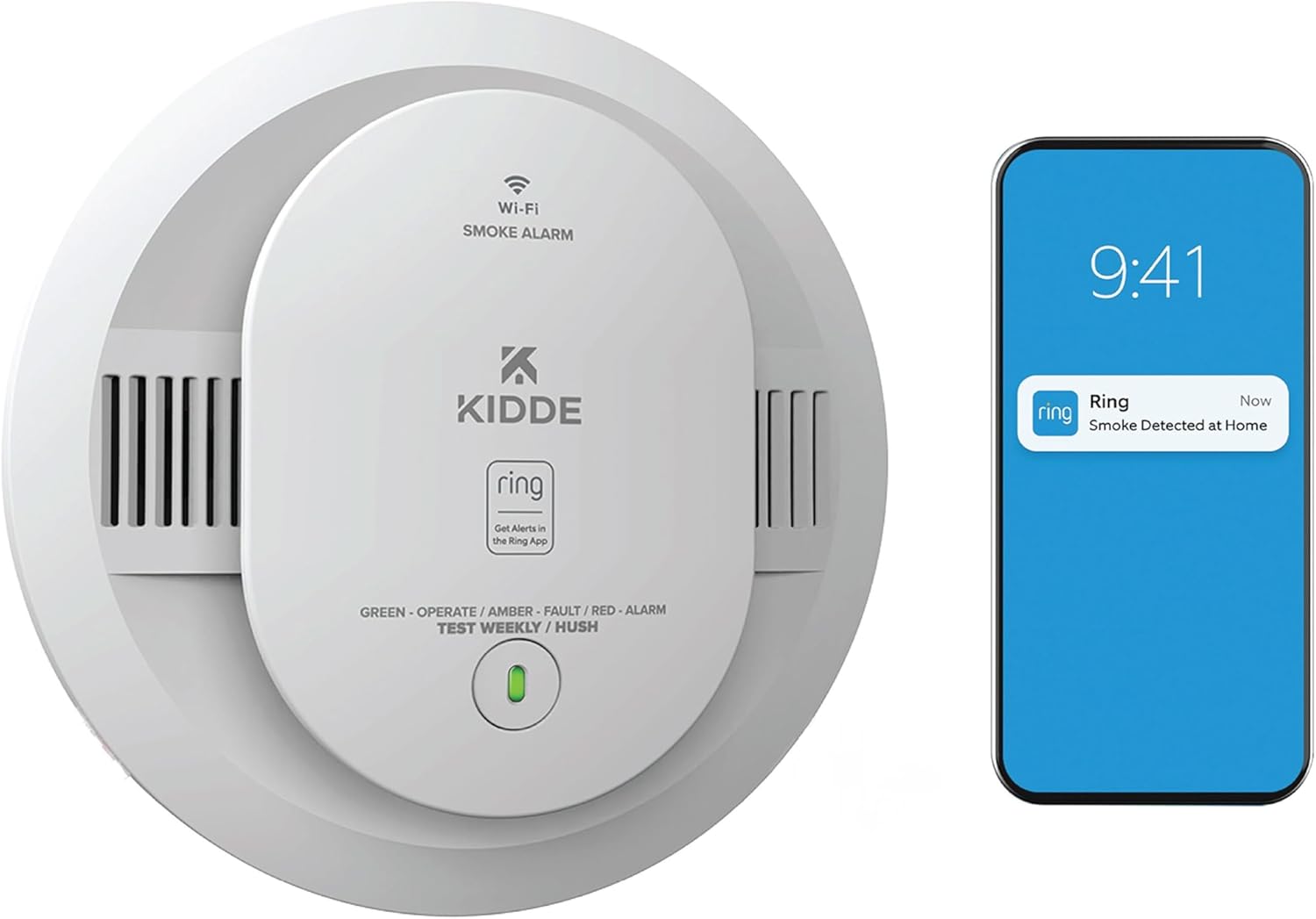
the Kidde Smart Smoke Detector with Ring App—the top-rated smart alarm that runs on batteries in 2026, made by the most reliable fire safety brand in America.Nothing can be hardwired by renters. A battery detector that doesn’t send you notifications via phone, however, won’t let you know when you’re not around.That was Kidde’s problem.
To start, you can get smoke and low battery alerts in real time using the Ring app; you don’t even need a Ring subscription to get these alerts.After that, we have wire-free interconnectivity, wherein a single smart detector may enhance all of your Kidde hardwired alarms so that they can all send phone notifications. There is no need to rewire.
As a last point, the Kidde smoke detector is UL 217 approved and 25% faster than previous versions, giving you more time to evacuate.Drawbacks: Only smoking allowed, no carbon monoxide. Uses the Ring mobile app. No possibility for hardwiring; only works on batteries.Renters, Ring users, and homeowners looking to upgrade their Kidde systems are the best candidates. Forget about CO detection and any hardwired requirements.
4: Kidde Smart CO Detector + Indoor Air Quality Monitor

Introducing the Kidde Smart CO Detector and Air Quality Monitor—a really one-of-a-kind tool that keeps tabs on the air you breathe on a daily basis.In the event of an emergency, the majority of detectors will activate. Humidity, off-gassing, and carbon monoxide build up covertly, far before any alarm goes off.This void is filled by the Kidde Air Monitor.
To start, there’s the built-in digital display that keeps tabs on volatile organic compounds (VOCs) from things like paint, cleaning supplies, and furniture in real time.The next step is a unified system that can detect CO, temperature, and humidity—a complete picture of the environment, not just a single threat.
Last but not least: plug-in compatibility with Alexa and Google Home—no need for batteries or wires—instant app notifications, complete voice control.Negative: you need a separate smoke alarm because it doesn’t detect smoke. Placement is limited by plug-in design. There is no relationship.Perfect for: families concerned about their children’s health, homes with airtight seals, and smart home users. Unattended fire safety systems are not suitable.
3: SimpliSafe Smoke & Carbon Monoxide Detector

If you’re a homeowner looking for a smoke and carbon monoxide detector with an integrated professional response system, go no further than the SimpliSafe.A lot of smart detectors will stop working after sending a signal. What, though, if you happen to overlook it or be sleeping when it’s happening?Problem solved with SimpliSafe.
To begin, there is round-the-clock expert monitoring; as soon as the alarm goes off, qualified agents will have emergency services at your door.The next step is artificial intelligence for false alarms, which can differentiate between actual smoke and food combustion, thereby minimizing the number of false alarms that consumers accidentally turn off.At last, a snap-in ceiling system that doesn’t require wiring—it’s battery-operated and sends daily health checks to your phone, so you’ll always know it’s functioning.
Downside: the SimpliSafe Gen 3 system and hub are required. Subscriptions are required for professional monitoring. Lack of monitoring for air quality.Who it’s best for: Families looking for expert backup, SimpliSafe users. For use in conjunction with the SimpliSafe system only; not on its own.
2: First Alert SC5 Battery Smart Smoke & CO Alarm

The First Alert SC5, which officially replaces Google’s defunct Nest Protect, is the top-tier smart smoke and CO alarm of 2026.The lifespan of millions of Nest Protect devices is coming to an end. Google is unmatched. No reliable smart alarm was available to households.Quick Reaction Intervened.To start, the SC5 is compatible with Nest Protect with a simple drop-in installation; as it uses the same ceiling mount, replacing it is a breeze and does not require any drilling.
After that, you’ll have Google Home integration with room-specific voice warnings. The alarm will announce the type of hazard and the exact room that felt its presence.Lastly, a battery-operated device that detects both fast-flaming and slow-smoldering fires as well as CO, thanks to its dual photoelectric and electrochemical sensors.
Disadvantages: users have experienced false alerts; app silencing is more effective than using the physical button. Battery type: CR123A, not AA.In quiet bedrooms, the status light shines brightly.Ideal for: homes with a Google Home or a previous owner of Nest Protect. Discontinued for those that utilize Alexa or have fixed requirements.
1: First Alert Hardwired Smoke Detector with LED Strobe

If you want a smoke detector that can protect your entire home, even if a regular alarm doesn’t work, go no further than the First Alert Hardwired Smoke Detector.A person who sleeps deeply or has hearing loss will not be disturbed by an 85-decibel alert, which is something that most people don’t think about. A detector’s sole purpose is rendered useless if it remains undetected.A First Alert takes care of it.
First, a very bright LED strobe that illuminates even when the door is closed and it’s completely dark outside; it activates in tandem with the sound of the alarm.Second, there’s intelligent strobe lighting that uses different flash patterns for smoke and carbon monoxide, so those inside know exactly to which signals to react.
Three, it’s hardwired, has a sealed battery backup that lasts ten years, and can link to up to eighteen other devices that are compatible with it.Drawbacks: WiFi is not available, and app alerts are not available. Installation must be done via wires. Only smoke, no carbon monoxide detector.Optimal for: families with children under the age of five, those who have trouble hearing, and those who sleep deeply. Rental properties and those requiring a remote alert are not for this.
Things to Consider Before Buying a Smart Smoke Detector:
You should evaluate key features and compatibility before investing in a smart smoke detector. Understanding technology, installation requirements, and monitoring options ensures you select the right device for your home’s safety needs.
Smart Home Ecosystem and Protocol Compatibility
Check if the smoke detector integrates with your existing smart home setup. Compatibility with protocols like Zigbee or Z-Wave ensures seamless communication between devices. It allows for greater functionality and ease of use.
Mobile App Features and Remote Notification Reliability
Assess the mobile app associated with the smoke detector. Reliable remote notifications alert you to potential dangers anytime, anywhere. Features like real-time updates and easy access to device settings enhance safety and peace of mind.
Reliable mobile app features are crucial for effective monitoring. Notifications should be prompt and informative, allowing you to take necessary actions quickly. Apps that provide detailed alerts and event history also help you better understand your home’s safety status, ensuring you stay informed even when away.
Enhanced Safety Benefits and Integration Advantages
Smart smoke detectors provide enhanced safety features, including real-time alerts, which enable quicker responses in emergencies. Integration with home automation systems allows for coordinated safety measures, such as turning off HVAC systems during a smoke incident, maximizing overall household safety.
Initial Investment Costs and Connectivity Dependencies
Initial costs can be significant for smart smoke detectors, as prices exceed those of traditional models. Connectivity is also imperative; without a reliable Wi-Fi connection, many advanced features may become ineffective or non-functional.
Smart smoke detectors often require you to replace batteries or upgrade systems to maintain connectivity, leading to additional long-term costs. This reliance on consistent internet access can limit functionality, resulting in a less effective safety measure in cases of connectivity issues.
Determining Optimal Placement and Device Count
Assess each room’s size and purpose to determine where detectors should be installed. Areas such as kitchens, hallways, and bedrooms may require multiple devices based on layout and distance from exits.
Network Configuration and Sensor Calibration Procedures
Establish a reliable Wi-Fi connection for your smoke detectors to communicate effectively. Proper sensor calibration ensures that devices accurately detect smoke and send alerts without false positives.
Connect your smart smoke detectors to the home Wi-Fi network by using the manufacturer’s app. Follow prompts to enter your Wi-Fi credentials. Calibration often involves adjusting sensitivity settings based on the installation environment, reducing the likelihood of nuisance alarms while ensuring comprehensive safety.
Routine Testing and Sensor Cleaning Protocols
Testing your smoke detector monthly ensures it responds appropriately in emergencies. Cleaning the sensors semi-annually prevents dust and debris from affecting their sensitivity, maintaining accurate detection of smoke particles.
Managing Battery Cycles and Firmware Updates
Battery health directly impacts the effectiveness of your smoke detector. Schedule battery replacements and regularly check for firmware updates to enhance performance and security features.
Checking battery cycles ensures that your detector remains powered, while timely firmware updates can introduce new functionalities and security patches. Refer to the manufacturer’s guidelines for specifics on changing batteries and updating the device, as these steps enhance the overall safety and functionality of your smart smoke detector.
Summing up
To wrap up, consider your needs for features like connectivity, maintenance requirements, and alert systems before purchasing a smart smoke detector. Ensure compatibility with existing smart home systems, evaluate battery life, and review user feedback to make an informed choice. Your safety and convenience should be the primary focus in your decision-making process.
Leave a Reply