
Finding the best solar panel for home shouldn’t feel like a chore. Are you tired of watching your electricity bills skyrocket every month? You deserve the freedom of energy efficiency without the stress of confusing technical specs. We reveal the top-rated panels that offer peak performance and massive savings. Let’s dive into the details to help you make a life-changing investment for your family’s future.
Contents
- Top 7 Solar Panel For Home:
- 7: DOKIO 100W Portable Foldable Solar Panel Kit
- 6: ZOUPW 100W Portable Solar Panel (5-in-1 Cable)
- 5: FlexSolar 100W Portable USB-C Charger
- 4: Renogy 2-Pack 100W N-Type Monocrystalline
- 3: ECO-WORTHY 200W Kit + 30A PWM Controller
- 2: Renogy 200W Portable Foldable (E.Flex)
- 1: Callsun 400W Bifacial N-Type (2x200W)
- Things to Consider Before Buying a Solar Panel For Home:
- Assessing Roof Suitability and Orientation
- Evaluating Energy Consumption and Sunlight Exposure
- Monocrystalline vs. Polycrystalline Performance
- Emerging Thin-Film Technologies for Residential Use
- Environmental Impact and Long-Term Savings
- Upfront Costs and Integration Challenges
- Selecting a Qualified Solar Contractor
- Finalizing System Design and Permitting
- Monitoring Energy Production and Performance
- Understanding Warranty Coverage and Repairs
- Final Words
Top 7 Solar Panel For Home:
7: DOKIO 100W Portable Foldable Solar Panel Kit

The DOKIO 100W Portable is the most cost-effective option for home solar testing.The initial investment in solar equipment is what puts most people off. In a single box, DOKIO eliminates that risk.Step one: fold six pounds down to a backpack size. Toss it on a shed, suspend it from a balcony, or put it away when the weather becomes bad.Next, with safety against reverse polarity, overcharge, and short circuit already built in, a separate PWM controller is included in the box.
A 9.84-foot connection ensures that the panel remains exposed to direct sunlight, while the controller is shielded from the sun and kept cool.Drawbacks: 12-volt only, simple PWM (no MPPT), and 100 watts (at most). An introduction, not a blueprint.Solar energy testing is best done by first-time purchasers and tenants. Neither whole-house nor rooftop builders should use this.
6: ZOUPW 100W Portable Solar Panel (5-in-1 Cable)

For households who already have a power station, the ZOUPW 100W Portable is the ideal portable panel.The single cable that comes with most inexpensive panels won’t work with your system. You can’t charge anything till you get adapters.That treasure search is over with ZOUPW.To start, it comes with a genuine 5-in-1 cable, meaning it can be used with 99% of power stations on the market today. The packaging features five different connector tips.Up next, we have A+ monocrystalline cells with an efficiency of 23.5%—a significant improvement over regular mono panels in overcast conditions.
Lastly, the panel can be angled toward the sun with dual 45-degree kickstands, which can pull up to 25% more electricity than when it is flat.Downsides: just 100 watts, little carrying case, and easily tangled cord.This product is ideal for individuals who already own power stations or are looking to purchase an emergency backup package. Warning: wattage maxers and rigid-array builders are not for you.
5: FlexSolar 100W Portable USB-C Charger

If you’re a homeowner looking to forego the power station altogether, the FlexSolar 100W Portable is your best bet.Aside from one other, most portable panels don’t do anything. Then you find out it can’t charge your phone during an outage, so you end up purchasing a power station in addition to it.In this case, FlexSolar foregoes the second buy.To start, the panel has an integrated 45-watt USB-C Power Delivery output, so you can simply connect your mobile device, tablet, or laptop. Direct sunlight to the device; no intermediary.
Next up: the slimmest serious portable here, with a profile of 0.59 inches and a weight of 4.1 pounds. Hides under a sofa for on-the-go preparation.The 18W USB-A port and IP67 waterproofing make it possible to charge two devices simultaneously in wet conditions.Limitations: 100 watts, USB only, and no AC inverter or battery connection.Persons without a power source, renters, and those purchasing emergency kits would benefit the most. Household array builders should not use this.
4: Renogy 2-Pack 100W N-Type Monocrystalline

For homeowners seeking a dependable pair, go no further than the Renogy 2-Pack 100W N-Type.The same brand is constantly touted in do-it-yourself solar forums. If something fails in the middle of summer, you may eat the loss if you go off-brand.Invest in Renogy for peace of mind.First, the panels can convert 25% more energy than regular 100-watt mono, which is equivalent to about 20 additional watts of power.Next up: technology based on 16-busbar cells, which disperse current across more pathways and so lessen the likelihood of hot spots and unseen fissures.Panels are more durable.
Finally, there are the standard quick-connect connections in the industry. These cables can be used in series or parallel and can be plugged into any solar generator or controller without the need for adapters.Downsides: the silver frame gives off an industrial vibe when placed on a black roof, there’s no controller provided, and longer runs require extensions due to the pre-attached wire length.Good for: careful do-it-yourselfers and installations on rooftops that will last for a long time. Avoid if you are a newbie or care mostly about appearances.
3: ECO-WORTHY 200W Kit + 30A PWM Controller

For those who have never run solar wiring before, the ECO-WORTHY 200W Kit is an excellent choice.Panels are simple to purchase. Connectors, fuses, and cables are also required, in addition to a controller. A lot of newbies just stop there.All of that is omitted from this package.Start with a ready-to-wire-on-the-spot 200-watt mono panel, 30-amp PWM charge controller, and cables—all in one convenient package.Next, 800 watt-hours daily in four hours of sunshine—enough to power an afternoon power station or a shed freezer—every day.
At last, a junction box with an IP65 rating and an aluminum frame that can withstand strong winds and snow loads—just attach it to a roof and leave it there.There is only one screen, the controller is PWM instead of MPPT, and the stock is getting low.Ideal for: those just starting out, do-it-yourselfers working on a shed, or those considering a cabin makeover. If you’re an MPPT purist or a big-array builder, this isn’t for you.
2: Renogy 200W Portable Foldable (E.Flex)
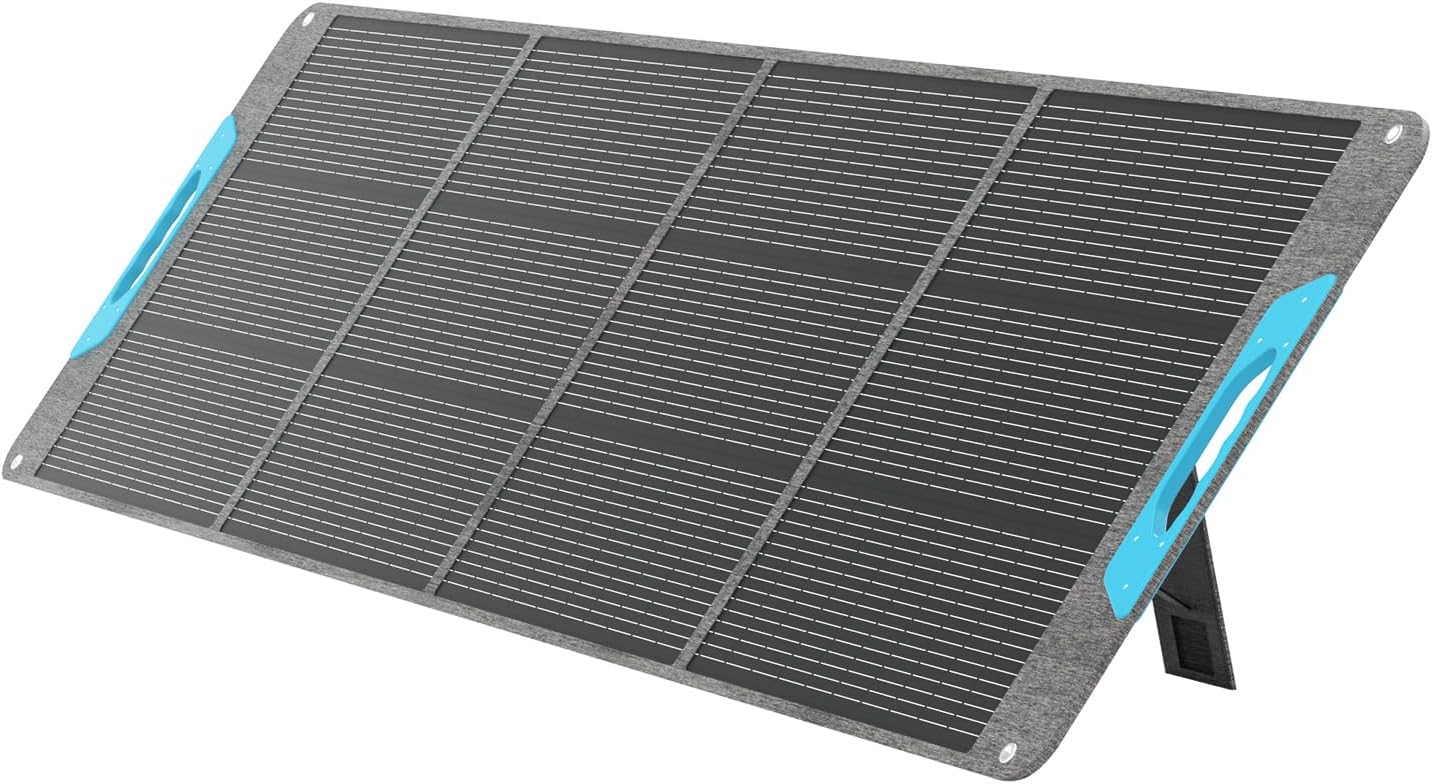
If you’re a homeowner who wants a reliable backup system in case of an emergency, the Renogy 200W Portable Foldable is your best bet.’Home backup’ panels often seem like a good idea until a storm comes. Not light enough to carry, too delicate to handle wet, or stashed in a bag you won’t be able to locate in the dark.The E.Flex is designed to be used in the here and now.To begin with, it is the lightest 200-watt portable on the market at 13.89 pounds. Just one minute to unroll, and one hand to grasp.Second, it’s foldable, lightweight, and has a 25 percent N-type conversion efficiency with 16 busbar cells—exquisite rooftop technology that fits in a backpack.
Thirdly, it is waterproof (IP65) and has a built-in magnetic handle, so you can attach it to a metal railing and it will stay upright and dry even when it rains.Downsides: not a permanent installation, there’s no controller included, and fabric-backed panels deteriorate more quickly than glass when left outside. You’ll also need a power station or batteries to power them.Ideal for: homes without power, those who leave the grid for the weekend, and those who need to be prepared for emergencies. Do not use if you are planning to install a roof on an ongoing basis.
1: Callsun 400W Bifacial N-Type (2x200W)

For homes looking to significantly reduce their electric bill, the Callsun 400W Bifacial N-Type is the ideal solar panel for home.Each of the other panels here lets light in from a different angle. Light reflected from snow and pavement, as well as other forms of wasted light, make up the back.That is altered by the Callsun.To begin, the cells draw power from both sides simultaneously in a transparent back-sheet bifacial arrangement. Get 30% more done in a day with the same footprint.The second group consists of N-type 16-busbar cells, which are utilized in high-end commercial arrays and have a conversion efficiency of 25%.
Third, one panel can remain fully operational even when shadowed by a chimney or vent thanks to the dual-module anti-shade parallel wiring.
Cons: more time spent setting up than with a simple rigid installation; requires an elevated mounting and a reflective surface to gather light from the rear.Ideal for: homeowners who want to live off the grid, those who want to create their own arrays, and those who are serious about dropping bills. Those just starting out shouldn’t use it.
Things to Consider Before Buying a Solar Panel For Home:
Over the years, solar energy has gained immense popularity for residential use. This guide will help you evaluate key factors such as cost, efficiency, and installation requirements to ensure you make an informed decision when purchasing solar panels for your home.
Assessing Roof Suitability and Orientation
Evaluating your roof’s condition and direction is vital. Optimal angles can increase energy capture, while adequate structural integrity ensures safe installation. Ensure your roof can support the weight and orientation of solar panels for maximum efficiency.
Evaluating Energy Consumption and Sunlight Exposure
Understanding your energy usage patterns and sunlight availability is key. Evaluate how much energy your household consumes, then consider how much direct sunlight your roof receives. This knowledge will guide you in selecting the right solar system size for your needs.
Assessing energy consumption involves reviewing past utility bills and identifying peak usage times. Simultaneously, measure sunlight exposure by observing shade patterns throughout the day, and consider seasonal changes. This analysis will equip you with the data needed to make informed decisions about your solar investment, ensuring the system aligns with both your energy consumption and environmental conditions.
Monocrystalline vs. Polycrystalline Performance
Monocrystalline panels generally outperform polycrystalline options in energy conversion efficiency, making them ideal for space-constrained installations.
Emerging Thin-Film Technologies for Residential Use
Thin-film technologies present flexible and lightweight solutions for residential applications, catering to unique architectural designs. Thin-film solar panels utilize various materials, including cadmium telluride and amorphous silicon, to offer customizable options for diverse roofing styles. Their adaptability allows you to integrate solar power seamlessly into your home without compromising aesthetics. Despite lower efficiency compared to crystalline panels, ongoing advancements promise improved performance and affordability, making them an exciting consideration for future installations.
Environmental Impact and Long-Term Savings
Solar adoption reduces your carbon footprint and promotes eco-friendly energy use. Over time, significant savings on energy bills can yield a return on investment that makes solar panels an economically sound choice.
Upfront Costs and Integration Challenges
Investing in solar panels requires a considerable initial outlay. The installation process may involve remodeling your home’s electrical system, which can introduce additional complexities and costs. Upfront costs often encompass the price of panels, installation labor, and any necessary upgrades to your home’s power system. While the long-term savings can offset these initial expenses, it’s crucial to ensure that local incentives and financing options are considered to enhance affordability. Additionally, technical challenges during installation may arise, necessitating professional help.
Selecting a Qualified Solar Contractor
Choosing the right contractor involves checking credentials, reviews, and experience. Look for industry certifications and ensure they have a proven track record with installations similar to your needs. A reliable contractor will provide transparency and support throughout the entire process, ensuring you are informed every step of the way.
Finalizing System Design and Permitting
During this stage, your contractor will finalize the system design and submit necessary permits to local authorities. This process ensures compliance with regulations and optimizes system performance.
Finalizing system design involves customizing solar configurations based on your home’s layout, roof angle, and shading. Your contractor will also navigate local zoning and permitting requirements, which can vary widely. Understanding each step accelerates installation and minimizes potential setbacks, ensuring your solar journey proceeds smoothly.
Monitoring Energy Production and Performance
Tracking your system’s energy production helps you identify potential issues early. Use software or apps designed for solar monitoring to receive real-time data on performance metrics, ensuring your system runs optimally.
Understanding Warranty Coverage and Repairs
Being aware of warranty details is vital for managing repairs. Check the terms provided by your installer, as they typically cover specific components of the system for set periods.
Warranties vary significantly between manufacturers and installers, influencing how repairs are handled. Components like solar panels often come with 25-year product warranties, while inverters may have shorter coverage. Knowing these details will prepare you for potential repairs and replacements down the line. Clear communication with your installer regarding the scope of warranty coverage can prevent unexpected costs and ensure you’re well-informed about your system’s longevity.
Final Words
Conclusively, consider your energy needs, roof space, and local regulations before purchasing solar panels. Evaluate different products and warranties to ensure quality and performance. Assess financing options and incentives available in your area, as they can significantly affect your overall investment. Thorough research will lead you to an informed decision that suits your household’s requirements.
Leave a Reply