
Finding the best studio headphones creates the foundation for every great track you produce. Are you sick of muddy mixes ruining your hard work? You deserve crystal-clear audio monitoring that reveals every sonic detail. Whether you are recording vocals or mastering a beat, the right gear makes a massive difference. We tested top-rated options to help you capture flawless sound without breaking the bank. Let’s look at the gear that will elevate your music today.
Contents
- Top 5 Studio Headphones:
- 1. Sennheiser HD 490 PRO – Best Studio Headphones Overall
- 2. Sennheiser HD 650 – Best Smooth, Detailed Listening/Mixing Studio Headphones
- 3. beyerdynamic DT 770 PRO – Best Closed-Back Studio Headphones for Tracking
- 4. Sony MDR-7506 – Best Lightweight Studio Headphones for Vocal Tracking
- 5. Audio-Technica ATH-M20x – Best Budget Studio Headphones
- Things to Consider Before Buying a Studio Headphone:
- Open-Back Headphones
- Closed-Back Headphones
- Sound Quality
- Comfort and Fit
- Durability
- Testing Before Purchase
- Considering Your Use Case
- Research Brands and Models
- Advantages of Leading Brands
- Storage Solutions
- Conclusion
Top 5 Studio Headphones:
1. Sennheiser HD 490 PRO – Best Studio Headphones Overall

The Sennheiser HD 490 PRO are designed to be your everyday workhorse if you’re looking for studio headphones that value accuracy, comfort, and long-session reliability. You may confidently arrange instruments and effects in your mixes or productions because to its open-back design, which produces an exceptionally broad and three-dimensional soundstage with extremely accurate imaging.
The full-spectrum, uncolored frequency response strives for accurate and dramatic reproduction, which you will love. You may make bass decisions that go beyond the studio thanks to a revolutionary low-frequency cylinder system that supports a full, clearly defined low end. Detail is sharpened and overall accuracy is improved by Sennheiser’s open-frame construction, which also aids in reducing total harmonic distortion and minimizing resonance.
Just as much care is put into the minutiae of comfort and workflow. You receive two separate pairs of ear pads, one for producing and one for mixing. This allows you to adjust the fit and tuning to suit your needs, and it also helps to alleviate ear strain that might develop from prolonged use.
Also included is practical studio flexibility. Detachable cables with right and left ear ports facilitate setup flexibility, while a proprietary cable coil construction aids in filtering out cable-borne noise for a clearer signal path.You can’t go wrong with the HD 490 PRO as your go-to reference headphones if you’re in the market for a set of contemporary, precision-focused open-back headphones that will allow you to believe your ears and remain comfortable as you hunt for the last five percent of a mix.
2. Sennheiser HD 650 – Best Smooth, Detailed Listening/Mixing Studio Headphones

Constructed to provide an elegant, genuine listening experience, the Sennheiser HD 650 is a reliable choice for both intense listening and meticulous mixing. A remarkable 0.05% reduction in overall harmonic distortion is a result of its design, which employs designed acoustic silk to offer perfect damping across the frequency spectrum. When honing in on delicate vocal textures, acoustic instrument edges, or room reverb, that little distortion can make all the difference.
In addition, the magnet systems have been fine-tuned to reduce harmonic and intermodulation distortion, and the driver parts have been hand-picked and matched. In reality, this gives you better control over your listening experience, which is especially helpful for fine-tuning layers that can blend together on less controlled headphones or making subtle EQ adjustments to your music or mixes.
With the HD 650’s quick transient response and lightweight aluminum voice coils, drum hits, plucked strings, and dynamic shifts in performance sound crisp and clear. Even if you tend to concentrate on the audible range, these headphones’ broad specified frequency response should help you enjoy more detailed and expansive playing.
The lengthy 118-inch cable allows you freedom of movement in a desk or studio arrangement without sacrificing sound quality, and the connection is simple with a 3.5 mm jack plug.The HD 650 is a tried-and-true option if you value a pair of headphones that sound professional, are easy on the ears, and allow you to listen for extended periods of time without getting tired.
3. beyerdynamic DT 770 PRO – Best Closed-Back Studio Headphones for Tracking
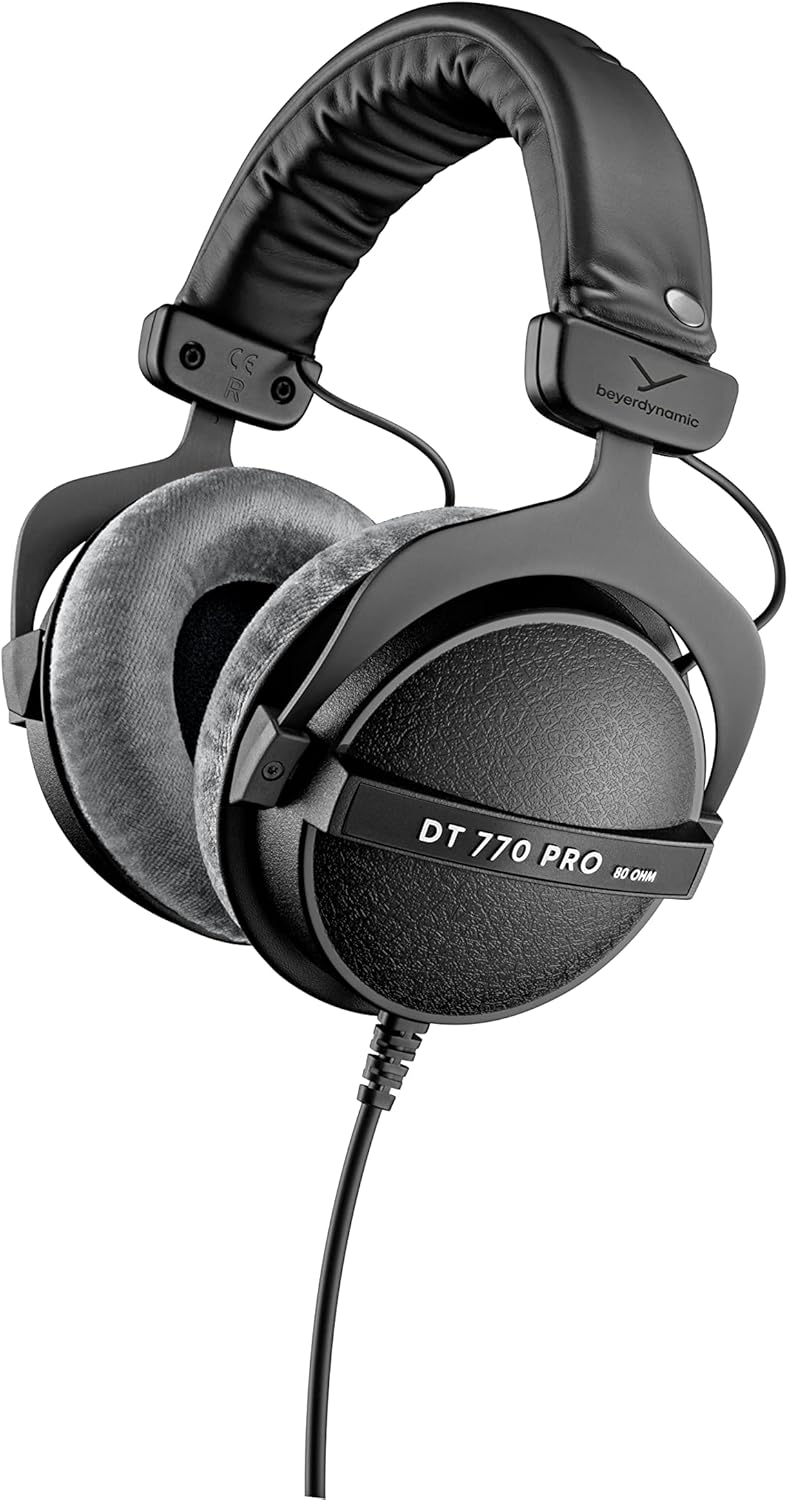
There is a good reason why the beyerdynamic DT 770 PRO (80 Ohms) is a studio staple: it is a dependable closed-back headphone that is perfect for tracking, recording, and everyday monitoring. With the closed over-ear design, you may record instruments or voices with less bleed and concentrate on the take at hand because sound is controlled.
Whether you’re recording in a studio or performing live, you’ll benefit from the crystal-clear, high-resolution sound that will bring out every nuance of your performance. When monitoring takes, refining edits, or directing an artist during a session, such clarity can be really helpful.A major selling point of long-session is how comfortable it is. The removable and replacement velour ear pads are contoured to provide all-day comfort. The adjustable, durable headband provides support without weighing you down, which is great for those long days of tracking.
Another strength is its durability. This model can withstand frequent use and travel because to its sturdy construction and reputation for resilience. The 3.0 meter single-sided cable allows you to move freely around the studio without having to constantly manage your cables, keeping your setup neat and tidy.Severe tracking calls for a closed-back workhorse, and the DT 770 PRO delivers in spades with its combination of isolation, comfort, and a sound that’s sure to wow.
4. Sony MDR-7506 – Best Lightweight Studio Headphones for Vocal Tracking

The Sony MDR-7506 are timeless studio headphones for good reason; they are lightweight, reliable, and ideal for vocal tracking. In addition to preventing background noise from distracting you during performances, the closed-back, over-ear design of these headphones will keep unwanted noise out of your recording sessions.
The combination of 40 mm drivers and neodymium magnets produces powerful and detailed sound, enhancing the ability to perceive breath control, subtle changes in timing within a voice take, and phrasing. Giving you a clear and unambiguous presentation, the frequency response is provided from 10 Hz to 20 kHz. This makes it ideal for monitoring and critical listening during sessions.
There are practical aspects of the studio that can help you as well. With its generous 9.8 feet of cable, you’ll have no trouble maneuvering around a desk or booth, and the accompanying 1/4-inch adapter makes it a breeze to connect to any standard audio interface, mixer, or headphones amp. The chord isn’t removable, but the straightforward design is great for everyday studio use, and many users love it.
Whether you’re constantly moving between home settings, practice places, and professional studios, you’ll appreciate how easy these are to store or transport thanks to their collapsible shape and soft cover.The MDR-7506 is an astute, reasonably priced workhorse that you can rely on session after session if you’re in the market for closed-back headphones that are both comfortable and reliable for monitoring vocals.
5. Audio-Technica ATH-M20x – Best Budget Studio Headphones

The Audio-Technica ATH-M20x are sturdy entry-level headphones that won’t break the bank but will be great for recording, practicing, and basic mix checks. Specifically engineered for use in home recording and mixing environments, it equips you with all the fundamentals for uncluttered, cost-effective monitoring.
Delivering consistent and dependable sound for everyday sessions, the 40 mm drivers are manufactured with rare earth magnets and copper-clad aluminum wire voice coils. If you’re tracking rhythm-heavy sections or just want to make sure your bass and kick aren’t clashing in a rough mix, you could find that this tuning helps with low-frequency performance. Even though it’s not a reference model, these headphones lay a solid tonal groundwork that facilitates ear training and improvement.
You can concentrate on the take even if the room isn’t completely silent thanks to the circumaural over-ear design’s curves that provide sound isolation. If you’re working with adjacent mics, you’ll appreciate the practical benefit of this isolation: it helps minimize bleed when recording.The single-side cable exit is another thoughtful feature that greatly enhances ease. Because of this, your work area will remain less crowded, and there is less likelihood that the cable will interfere with your instrument, interface, or desk arrangement.
Comfort, decent isolation, and useful low-end emphasis are all delivered at a price that makes sense by the ATH-M20x, making them an economical monitor for tracking and everyday listening, a solid backup pair, or anyone creating a home studio.
Things to Consider Before Buying a Studio Headphone:
There’s more to buying studio headphones than picking a trendy model; you should assess sound accuracy, frequency response, comfort for long sessions, durability, isolation vs. bleed, impedance and how they pair with your gear, plus your monitoring goals and budget to ensure the headphones serve your production needs reliably.
Open-Back Headphones
Open-back headphones give you a natural, roomy soundstage that makes panning and reverb decisions clearer; models such as the Sennheiser HD 600 (300 Ω) and AKG K702 are staples in mixing rooms. You’ll notice more accurate midrange imaging and less perceived bass bloat, but they leak sound and aren’t suited for vocal tracking or noisy environments, so plan your workflow around when you need that transparency.
Closed-Back Headphones
Closed-back designs prioritize isolation and punchy low-end, making them ideal for overdubs, tracking, and reference checks when you can’t use monitors; common studio choices include the Sony MDR-7506 and Audio‑Technica ATH‑M50x (≈38 Ω). You’ll benefit from lower sound bleed into microphones and more consistent bass response in untreated rooms, though imaging will feel more internal than open-back alternatives.
The extra control you get with closed-backs often comes with trade-offs: many models emphasize bass and may color highs, so you should cross-check mixes on open-back headphones or monitors. Manufacturers offer multiple impedance options (e.g., DT 770 at 32/80/250 Ω), so match your interface or headphone amp-low-impedance versions (≤80 Ω) work directly from most interfaces, while high-impedance cans often need a dedicated amp for full dynamics.
Sound Quality
You’ll prioritize a neutral, linear response for mixing-look for headphones with a smooth 20 Hz-5 kHz curve and controlled treble. Dynamic drivers are common; planar-magnetic models like the Hifiman Sundara or Audeze tend to offer lower distortion (<0.2% THD) and tighter bass. Check published FR measurements, read null tests against a reference (e.g., IEC 60318-4), and compare how vocals and kick drums sit together at -6 dB to judge translation.
Comfort and Fit
You need headphones you can wear for hours: target 200-350 g weight, memory-foam pads, and earcup inner diameters above ~50 mm for larger ears. Adjustability matters-soft headband padding and low-to-moderate clamping force (about 300-600 g) reduce fatigue. Try them for a 60-90 minute session where possible, and ensure you can swap pads if you sweat or prefer leather over velour.
Practical testing helps: wear the headphones while sitting, standing, and turning your head to detect pressure points; brands like Sennheiser HD600 (~260 g) and Beyerdynamic DT 990 (~250-300 g) illustrate how similar weights can feel different due to pad shape and clamping geometry. Note that on-ear designs concentrate pressure and are generally unsuitable for long mixing sessions, while over-ear circumaurals distribute load; look for replaceable padding and a headband that maintains even pressure across the skull to avoid hotspots after two hours.
Durability
You should inspect materials and serviceability: metal headbands and steel yokes last longer than plastic, detachable cables reduce failure points, and replaceable ear pads extend usable life. Check warranty length-1-3 years is common-and whether the manufacturer sells spare parts. Frequent studio use expects multi-year resilience, so build quality matters as much as sound.
Examine common failure points: hinge screws, headband padding seams, and cable strain reliefs. Models like the Audio‑Technica ATH‑M50x and Beyerdynamic DT series provide user‑replaceable cables and pads, making them cost-effective for heavy use; planar models often require more careful handling due to fragile diaphragms. Confirm parts availability and read service forums for real-world longevity-studios report 3-7+ years from metal‑framed headphones with replaceable components versus 1-2 years for low-cost sealed plastic designs.
Testing Before Purchase
Take 10-15 of your reference tracks spanning vocals, synths, and kick drums and audition for 20-30 minutes at multiple volumes using your interface; listen for clarity around 1-5 kHz, bass extension down to ~40-60 Hz, and stereo imaging via hard-panned material. Try both unamplified and with a headphone amp if you plan to use one, and compare models like Sony MDR-7506, Beyerdynamic DT 1990 Pro, and AKG K371 to judge balance and comfort.
Considering Your Use Case
If you mix, choose neutral, open-back models like Sennheiser HD 600 or AKG K702 for accurate spatial cues; while tracking favors closed-back options such as Beyerdynamic DT 770 Pro to prevent bleed. For portable editing or streaming, prioritize 32-80 Ω and foldable designs; if you run 4-6 hour sessions, favor lighter cans under 350 g and breathable pads.
Producers working with bass-heavy genres should verify extension below 60 Hz on test tracks like kick drums and synth subs, since some “bass-forward” cans exaggerate 100-200 Hz but lack sub-bass. For mastering aim for variations within about ±2 dB across 100 Hz-10 kHz and always cross-check on studio monitors and earbuds so you catch translation issues across systems and volumes.
Research Brands and Models
You should shortlist models with proven measurements and use-case fit: ATH‑M50x (38Ω, punchy low end), DT 770 Pro (32/80/250Ω variants, great isolation), Sennheiser HD 600/650 (300Ω, open and neutral for mixing). Consult measurements from sites like Rtings or SoundGuys and look for FR curves, distortion specs, and user reports on comfort and clamp force.
Dig deeper by comparing impedance and real-world performance: choose ≤80Ω if you’ll run headphones from laptops or interfaces, and opt for 250-300Ω only if you have a dedicated amp. For example, DT 770 Pro 80Ω isolates well for tracking, while HD 600’s 300Ω open design gives a flatter midrange for mastering. Check pad replacement availability, measured THD (<0.1% at typical levels), and community threads for long-term reliability.
Advantages of Leading Brands
You get consistent engineering, extensive model ranges, and documented specs: for example, Beyerdynamic offers 32/80/250 Ω options, Audio‑Technica supplies 45 mm drivers in M50x, and Sennheiser’s HD600 is a 300 Ω reference. That means predictable performance, broad aftermarket support, and easier comparisons when you’re matching headphones to your interface, amp, and mixing goals.
Storage Solutions
You can extend lifespan by storing headphones in a hard-shell case or padded flight case sized to avoid pressure on the cups; cases from brands like Pelican or Gator typically range. Maintain ambient conditions around 20-25°C and 40-60% relative humidity to protect adhesives and foam. Coil cables loosely with a 5-10 cm loop radius and use Velcro straps to prevent kinks.
For studio setups, mount holders that distribute weight across the headband rather than a single peg to prevent deformation; magnetic hooks can stress leather or synthetic headbands, so choose wider supports. Consider silica gel packs in cases to absorb moisture and swap them every 3-6 months, and avoid stacking heavy gear on top of stored headphones to preserve clamping force and earcup shape.
Conclusion
Considering all points you should weigh sound accuracy, comfort for long sessions, build quality, impedance and compatibility with your gear, closed vs open design, cable and connector options, and budget; test headphones if possible and prioritize neutral response and comfort so your mixes translate reliably across systems.
Leave a Reply